Treasure Stone Park Nasu with Kids: Japan's Best Rainy-Day Gem Hunt (2026)
This post may contain affiliate links. If you book through them, I earn a small commission at no extra cost to you. Learn more.
If you're planning a family trip to Nasu and the forecast turns ugly, this is the place to know about: Treasure Stone Park is a covered gem-digging attraction where kids (and, honestly, parents) shovel through sand and gravel hunting for real gemstones — amethyst, quartz, tiger's eye and dozens of others — and everything you find goes home with you. The main digging areas are roofed, the park openly markets itself as a rainy-day destination, and a session costs about as much as a fast-food lunch.
As a local dad, I took my then-4-year-old daughter here on a Nasu trip, and weeks later she was still sorting her gem haul on the living room floor. It's a short attraction — plan on one to two hours, not a full day — but the satisfaction-per-yen ratio is absurdly high. This guide covers how the two digging courses work, the one real booking catch, and the winter closure that trips up more than a few trip planners.
Quick Facts
| Crystal River (walk-up course) | ¥800 per person (about $5.50), 20 minutes |
| Underground Mine (reserved course) | ¥1,800 per digging plot (about $12), 12 minutes — up to 3 diggers + 2 observers per plot |
| Geode cracking | ¥700–¥3,000 (about $4.50–$20) depending on size |
| Hours | Around 10:00 AM–5:00 PM (to 4:00 PM in winter) — some listings show a 9:30 open, so check before you go |
| Closed | Thursdays; extra Wednesday+Thursday closures Nov–Dec; fully closed roughly Jan 20 to mid-March |
| Time needed | 1–2 hours |
| Rainy-day friendly? | Yes — the digging areas are covered, and the park promotes itself as a rain-OK spot |
| Age range | No hard minimum; a separate shallow river for preschoolers, and under-5s can join a mine plot as observers |
| Nearest station | Nasushiobara (Tohoku Shinkansen), then taxi or rental car ~25–30 min |
| Parking | Yes, roughly 80 spaces |
| English signage/staff | Essentially none — but the activity is visual and hands-on, so it barely matters (the Japanese-only booking site is the one real barrier) |
| Payment | Cash only |
How it works — and the one booking catch
There are two main ways to dig, and they work completely differently:
The Underground Mine (Chika Kōzan) is the flagship: a themed mine tunnel where your family gets its own digging plot for 12 minutes. One plot costs ¥1,800 and fits up to three diggers plus two observers (babies don't count toward the limit, but strollers can't come in). The catch: the mine is advance online reservation only, through a Japanese-only booking site, and weekend slots vanish fast. Reservations seem to open a few weeks ahead at unpredictable times and can be made up to about nine hours before your slot — but in practice, if you want a weekend plot, you need to be checking the site days ahead. I failed to get one for our visit, and I live here and read Japanese. Consider that fair warning.
The Crystal River is the walk-up alternative: ¥800 per person for 20 minutes of digging in a shallow artificial river, signup on the day at the front desk. No reservation, no Japanese website, no problem. This is what we did, and it was more than enough for a great visit.
There's also geode cracking (¥700–¥3,000 depending on the rock you pick) if your kids want the lottery-ticket thrill of splitting open a stone to see what's inside.
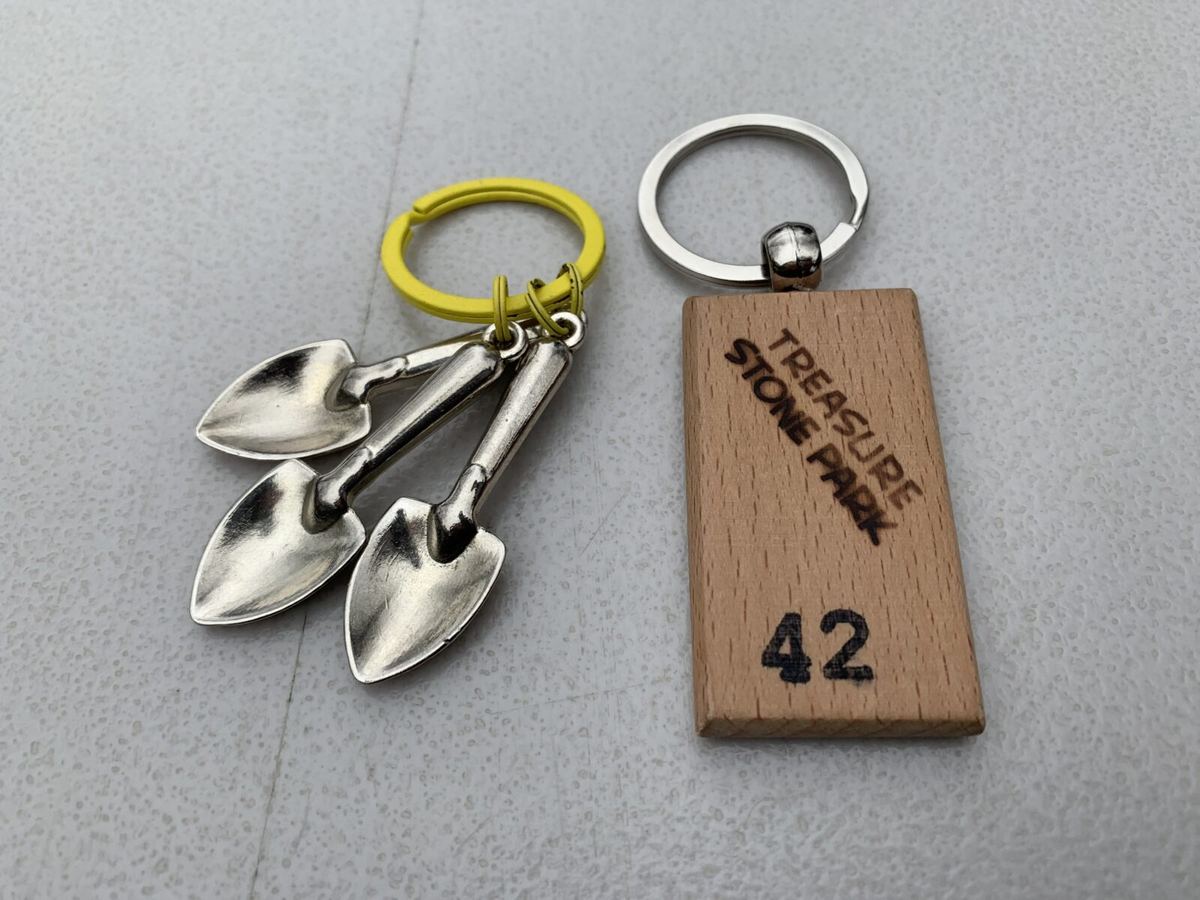 Signup gets you a numbered keychain tag — later swapped for a bucket — and everyone digs with these mini shovels. No hands allowed; it's a real rule.
Our visit: 40 minutes of waiting, 20 minutes of gold-rush focus
We arrived around 10:00 AM on a spring-break weekday, and the front desk was already busy — though the line moved faster than it looked, and we were signed up for the Crystal River in about 10 minutes. You pay at signup (cash), state how many diggers you have, and receive a numbered keychain tag that you'll later exchange for a bucket. Groups get called up roughly five at a time; the announcements are audible outside but not loud, so don't wander off to the toilets at the wrong moment.
Our wait was about 40 minutes. Here's the thing that saved it: outside the reception building there's a free treasure-digging sandpit — big enough for maybe 20 kids — seeded with small gemstones, and anyone can dig it while they wait, no charge. The stones are much smaller than what you'll find in the paid river, but there are lots of them. My daughter spent the entire wait in there and pulled out 20–30 tiny gems, announcing each sparkly one like a press conference. (One honest note: the sandpit is outdoors, so on an actually rainy day this waiting-time bonus mostly disappears — the paid digging areas are the covered part.)
Then our number was called. At the bucket exchange, the keychain becomes a colored bucket — we were "yellow bucket squad" — and the color is how staff signal time's up for each group. After a short safety briefing (dig with the shovel, not your hands; put gems in the bucket, not sand and water; and if you find the "legendary key," you win a large crystal), you're set loose on the river.
The river is a loop of about 60 meters, around a meter wide at its widest, and you can dig anywhere along it — some people roam hunting for a lucky stretch. There's a separate shallow Chibikko River for preschoolers (no legendary key there, but easier digging). Our 4-year-old dug the main river alongside us just fine; for a 3-year-old I'd point you to the preschooler river.
What followed was 20 minutes of the most concentrated silence our family has ever produced. At one point all three of us were digging without a word — it's genuinely absorbing in a way I didn't expect.
At the end, staff weigh each person's haul. My wife: 60 grams. My daughter: 65 grams (she has not let my wife forget this). Me: 80 grams. The park's benchmark for a "great success" is apparently 200 grams per person, so we were modest performers — and it still felt like a lot of gemstones. Everything goes home with you.
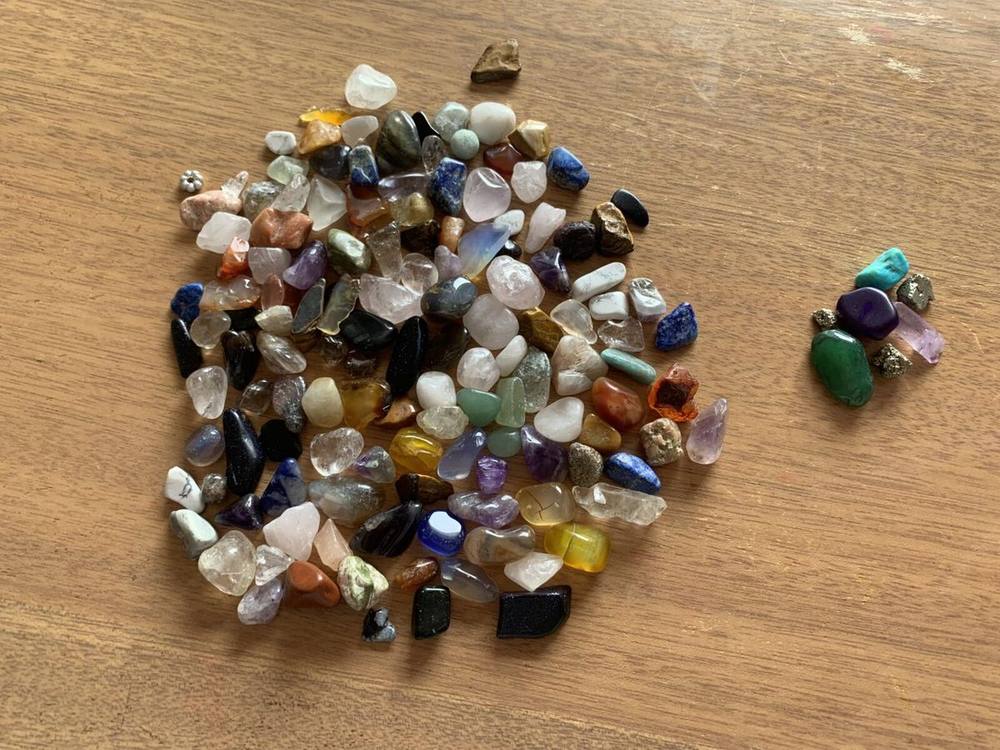 The combined family haul from 20 minutes of digging. Every single stone goes home with you — no "one souvenir each" negotiation required.
The crane games, and the fun that continues at home
Inside the building there's a small arcade corner — crane games and capsule machines stocked with gems, set noticeably easier to win than the ones in city arcades. My daughter won a little treasure chest containing a crystal on a ¥100 crane game and reacted like she'd cracked a bank vault. Fair warning: this corner was the most crowded part of the whole facility.
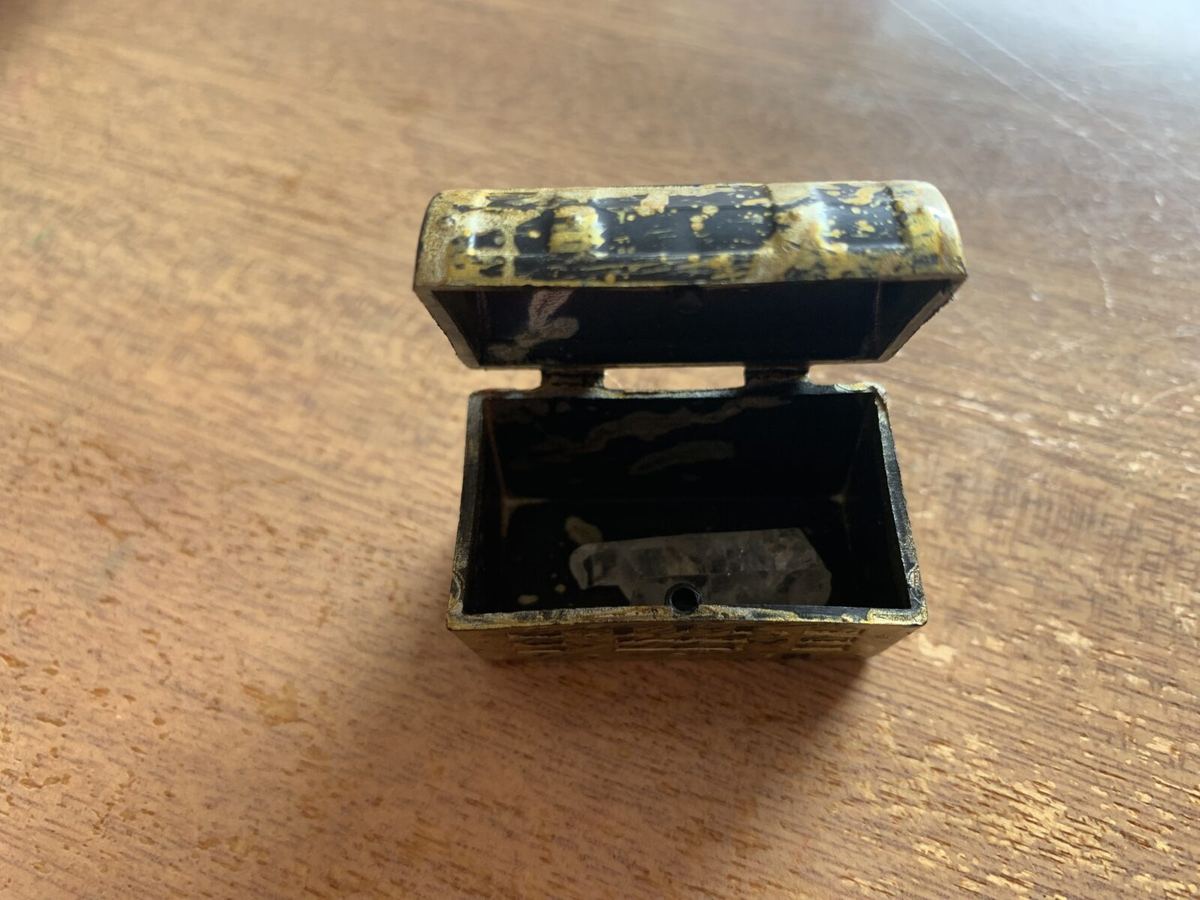 The ¥100 crane-game treasure chest. Set to be winnable — a rare act of mercy in the Japanese arcade world.
The sleeper feature of this place is what happens after you leave. At signup you get a gem identification chart, and sorting the haul at home — "this one's amethyst, is that tiger's eye?" — turned into a full family-evening activity. For a souvenir that cost ¥800 per digger, that's remarkable mileage.
Our total damage for three people: about ¥2,500, for roughly 1.5 hours of entertainment plus the at-home sorting session. As tourist attractions go, that's about the best cost-performance in Nasu.
What Locals Know
- The winter shutdown is a real trip-planning trap. The park closes entirely from around January 20 to mid-March, on top of regular Thursday closures and extra Wednesday+Thursday closures in November–December. If you're planning a winter Nasu trip around this place, check the calendar first — plenty of families have driven up to a locked gate.
- Cash only. Signup, geodes, crane games — bring yen, including coins for the arcade corner.
- Book the Underground Mine days ahead — or just plan on the Crystal River. Weekend mine slots fill almost immediately after they open. If you can't navigate the Japanese booking site (see below), the walk-up Crystal River honestly delivers most of the magic anyway.
- Do the Crystal River early. Waits stretch as the day goes on — we waited 40 minutes having arrived at opening on a weekday. On summer and Golden Week weekends, expect much worse; the free sandpit takes the edge off, but only in dry weather.
- A parking attendant will quote you the current wait at the lot entrance ("it'll be about XX minutes from now — OK?") before waving you in, which at least spares you from committing blind. There are only around 80 spaces.
- It pairs perfectly with the rest of Nasu. This is a 1–2 hour stop, not a full day — locals treat it as the rainy-morning or half-day slot alongside Rindoko Family Farm, Nasu Highland Park, or the monkey park.
Getting There
Treasure Stone Park sits in the Nasu highlands (address: 123 Takakuhei, Nasu-machi, Tochigi), among the hotels and attractions north of Nasushiobara Station — about 3–5 minutes by car from several of the area's family resorts.
From Tokyo, the trip is one Shinkansen leg plus a road leg:
There is technically a bus route — a Kanto bus from Nasushiobara Station toward Yuai-no-Mori, then the seasonal Nasu Loop Bus E-course (runs roughly April–November, ¥800 per ride) — but it's multi-transfer, seasonal, and infrequent. With kids in tow, a taxi or rental car from Nasushiobara Station is the realistic option, and if you're doing Nasu properly you'll want a car for the other attractions anyway. Shinkansen fares and times change, so check current schedules before you travel.
How much English will you need?
On-site: essentially none, and it barely matters. Digging sand with a shovel is the same in every language, the safety briefing is short and easy to mime along with, and staff are used to families. The gem chart is pictures. This is one of the most language-barrier-proof paid attractions I've covered.
The one genuine barrier is the Underground Mine reservation, which runs through a Japanese-only booking site. If you can't get a Japanese-reading friend or your hotel concierge to book it, skip the stress and do the walk-up Crystal River — that's what we did, and nobody in my family felt shortchanged. One more note: the official website is Japanese-only and had SSL certificate problems when I last checked, so if the link at the bottom of this page fails, just search "Treasure Stone Park Nasu."
Verdict
Treasure Stone Park is the best rainy-day card in the Nasu deck, and a great 1–2 hour stop even in sunshine — kids from about 3 to early elementary age go into a genuine treasure-hunting trance, the take-everything-home policy makes it the rare attraction where the souvenirs are free, and the gem-sorting session afterward extends the fun into your evening. At roughly ¥800 per digger, it's also one of the cheapest paid attractions you'll find anywhere in Japan.
It's not a destination in itself — don't build a day around it, and don't come between late January and mid-March, when it's closed entirely. But if Nasu is on your itinerary and you have kids who like shiny things (so: kids), this belongs on your list, weather forecast be damned.
This review reflects our family's actual visit. Prices, hours, and closure dates can change — check the official Treasure Stone Park website before you go (Japanese only; if the link fails, search "Treasure Stone Park Nasu"). Questions about fitting Nasu into your Japan trip? Get in touch.
Written by Tokyo Dad, a Japanese dad sharing family visits in Japan.