Riding the Shinkansen with Kids: Seats, Strollers, and What Locals Book (2026)
This post may contain affiliate links. If you book through them, I earn a small commission at no extra cost to you. Learn more.
Yes, you can take the Tokaido Shinkansen (the bullet train between Tokyo, Nagoya, Kyoto, and Osaka) with a toddler — and reserving seats together makes the journey easier. The Tokaido Shinkansen is not all-reserved year-round. Nozomi normally has unreserved seats in cars 1–2, but operates with all seats reserved on designated peak dates. Hikari and Kodama also offer unreserved seating; check your train and travel date. With a young child, I still recommend reserving seats together rather than relying on space being available.
Seat and booking guidance checked September 20, 2026 against the official sources linked below; baggage handling fee rechecked October 13. Our travel memories remain from the original family trips.
As a local dad, I've made this Tokyo–Osaka run more times than I can count with my daughter, starting when she was 4. This post covers exactly what I book, what I skip, and the facilities that make or break the ride with a small child.
At a Glance
| Route covered | Tokaido Shinkansen: Tokyo – Nagoya – Kyoto – Shin-Osaka |
| Child fare | Children ages 6–11 pay roughly half fare; kids under 6 ride free on a parent's lap (no seat) — confirm current child-fare rules on the official site |
| Reservation | Required for guaranteed seats — book on JR Central (smartEX) or via a rail pass agent |
| Journey time (Tokyo–Shin-Osaka) | About 2 hours 30 minutes on the fastest Nozomi service |
| Stroller-friendly? | Yes, with the right seat — see below |
| English support | Ticket machines, smartEX site, and station signage are in English; onboard announcements are bilingual |
| Diaper-changing / nursing | Check your train's facilities map; ask the conductor about baby-changing facilities and the multipurpose room |
👉 Book tickets: Check prices on Klook
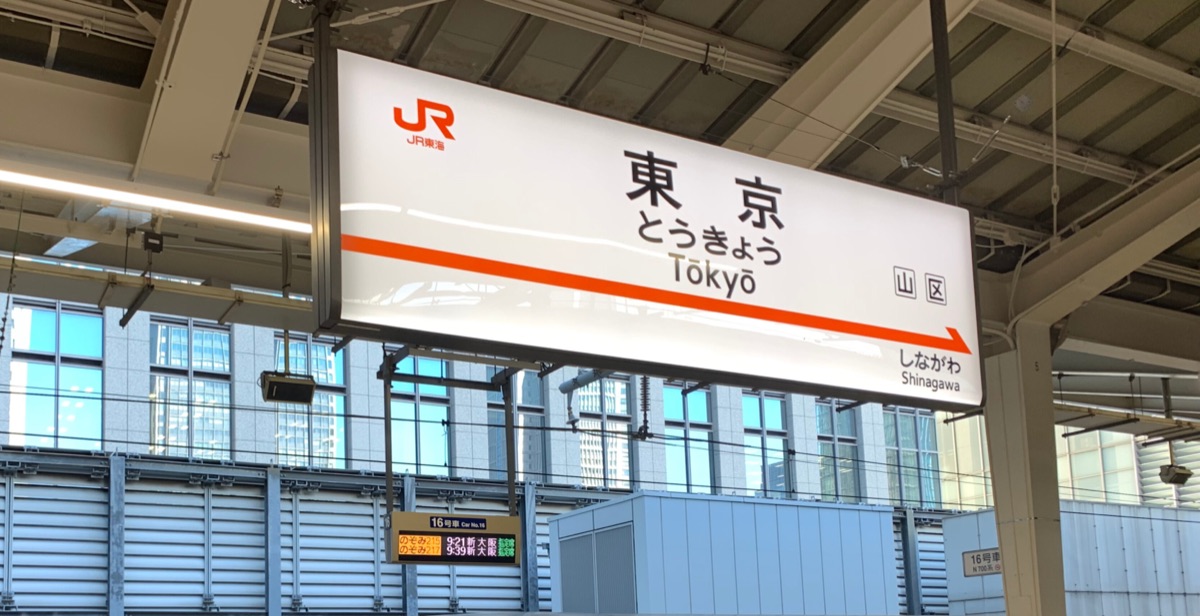 Tokyo Station's Shinkansen platform — this is where the seat you booked starts to matter.
How to book (and actually get the seats you want)
You have two realistic options as a visiting family:
- A point-to-point ticket booked through an English-language platform like Klook. The product page explains how to reserve seats and collect tickets.
- smartEX, JR Central's official English-language booking site, where you can select specific cars and seats yourself.
Booking early and choosing an exact seat are different steps. smartEX accepts eligible reservations up to one year ahead, with limited availability; the train and seat are not finalized at that early stage. Standard one-month sales open at 10:00 AM Japan time, and exact seat selection belongs to that one-month window. Oversized-baggage seats and certain other products are excluded from one-year advance reservations. From the JR Central (smartEX) homepage linked above, select English and open the reservation guide to check your product's booking window and reconfirm your assigned train and seats. For peak dates, plan ahead rather than assuming unreserved seating will be available.
What to actually reserve:
- A window and aisle pair, not a three-seat row, if there are two of you. Three-across middle seats are miserable with a toddler who wants to see out the window.
- A seat with an oversized-baggage area, if you need that space. Select that specific seat type when booking, at no extra charge beyond the reserved-seat fare. Some deck storage areas have been trialed without reservations since July 2025; oversized bags still require the designated seat reservation. See the luggage-space notices on JR Central (smartEX).
- Know the baggage fine print: ordinary luggage with combined height, width and depth over 160cm and up to 250cm requires a seat with an oversized-baggage area. JR Central's smartEX reservation guide lists a ¥1,000 handling fee for bringing such luggage without the required reservation (checked October 13, 2026). Strollers are exempt from the size-based requirement, but using the reserved baggage area still requires the corresponding seat. Keep aisles clear.
- A seat near a toilet. Restrooms are spaced roughly every other car, but if you're traveling with a child who needs frequent bathroom trips (or you're mid-potty-training), booking a seat in a car that has one is worth the small trade-off in legroom.
What I skip: I don't chase the oversized-luggage seats when I'm not traveling with a stroller — they're in high demand and get booked out fast, so I save that request for trips when I actually need it.
What Locals Know
- Try a Shin-Osaka-terminating Nozomi as well as through services. My booking tip is to compare the 300-series services when they appear in the timetable, then use the seat map to choose. The useful part is checking nearby departures, not treating a train number as a crowd guarantee.
- Skip the crowded in-station bento shops. During peak travel times, station bento counters can have long lines. Department store basements (depachika) near the station — for example, in Tokyo at the Marunouchi-side basement food halls — sell comparable quality bento with much shorter waits.
- Look for the separate Shinkansen entrance when transfer gates are crowded. Exiting the regular JR area and entering through a direct Shinkansen gate can be an alternative. Ask staff first: your ticket may require an extra local fare, so compare that cost with the queue before leaving the paid area.
- Arrive on the platform early, not just at the station early. Tokyo Station in particular is enormous, and Shinkansen platforms can be a genuine hike from the entrance. Budget extra time to walk there with a stroller and bags rather than just budgeting time to enter the building.
- Consider shipping your suitcases ahead with Ta-Q-Bin (Yamato Transport's luggage courier). Your hotel can help arrange delivery to the next hotel, leaving you with a daypack and stroller on the train. Ask for the price and delivery date for your route before handing over anything you need the next day.
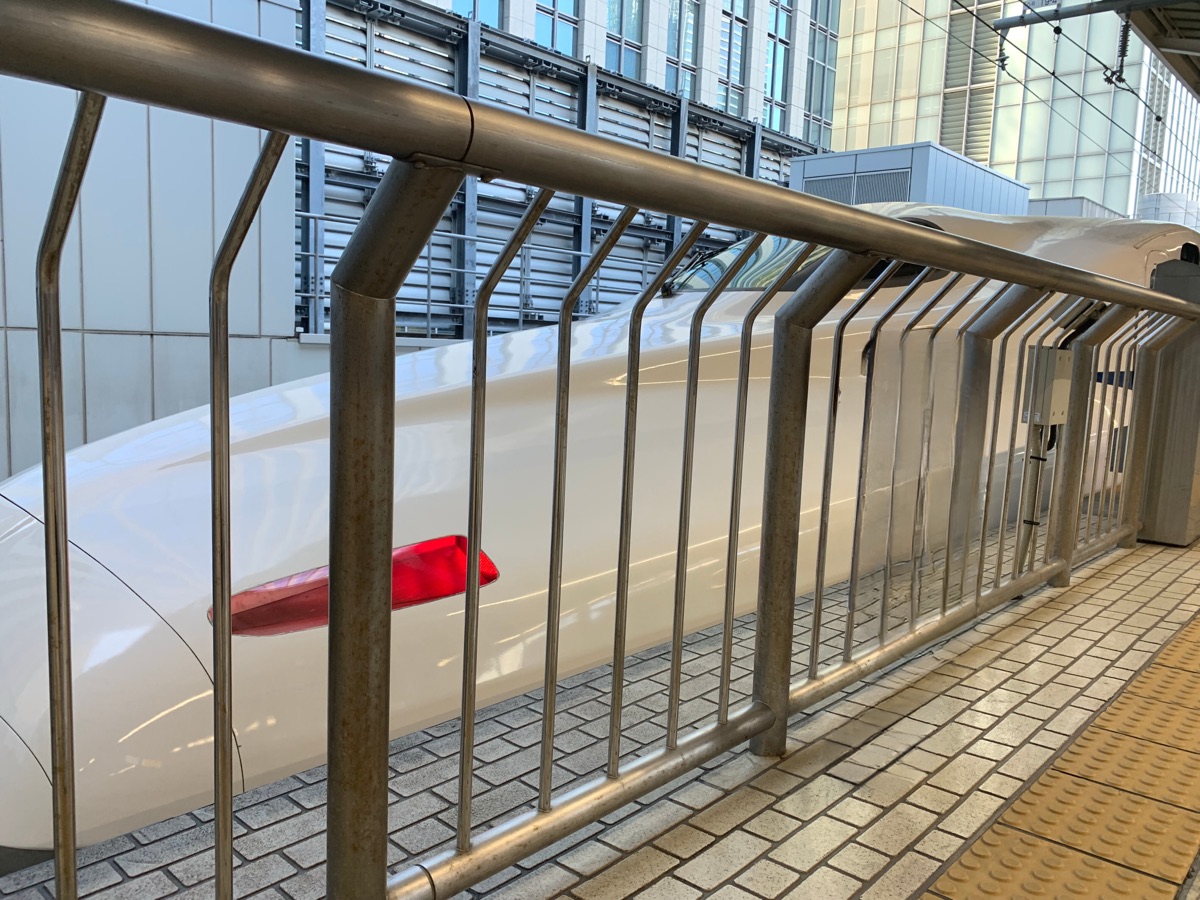 The Tokaido Shinkansen at the platform — boarding is quick once you know your car number.
What it's actually like with a small child (real trip notes)
Here's roughly how a Tokyo–Osaka run goes with my daughter, seat reserved in advance:
- Board and eat immediately. We buy a bento before boarding and she eats as soon as we sit down — a full stomach plus the rhythm of the train is doing half the work of settling her down.
- Nap window. On a good day she's asleep by the time we pass Nagoya, roughly halfway through the trip. Build your seat choice around this — a window seat gives her something to lean against.
- Backup entertainment for the no-nap days. Onboard WiFi on the Shinkansen exists but can be patchy, so I tether video streaming from my phone's data plan rather than relying on train WiFi for anything important. Bone-conduction kids' headphones (the kind that sit against the ear rather than in it) are worth packing — they keep sound low enough not to bother other passengers while still working for a small child.
- Keep the noise down proactively, not reactively. Japanese train cars are notably quiet, and other passengers — including business travelers working — will notice a loud toddler more than they would elsewhere. Bringing quiet toys, snacks, and a headphone plan in advance heads off most meltdowns before they start.
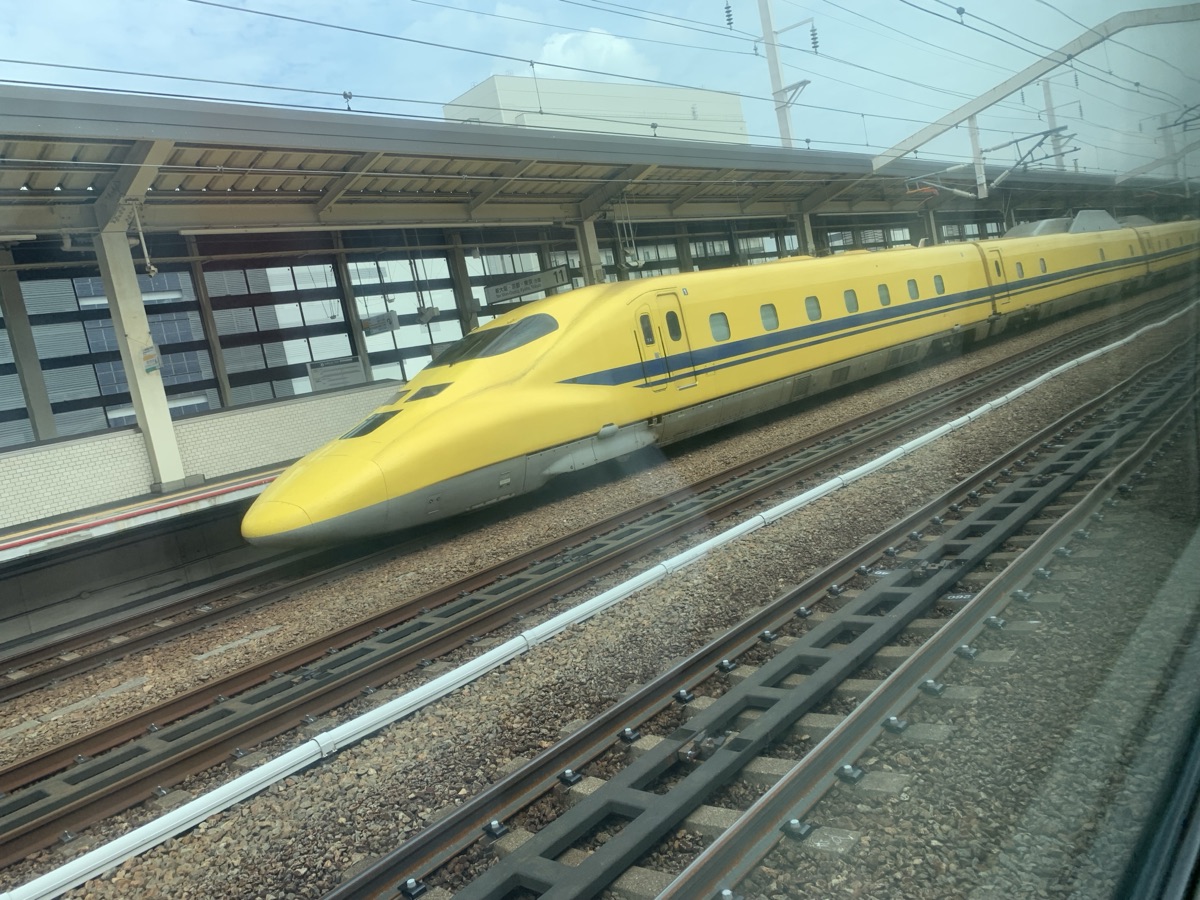 A window seat gives kids something to watch — and somewhere to lean when the nap window hits.
Diaper changing, nursing, and the multipurpose room
- Toilets and accessible facilities are in designated cars, not every car. Check the official car-layout and facilities guide when choosing your seats, and look for the baby-changing signs onboard.
- On the Tokaido Shinkansen, the multipurpose room (多目的室) is in car 11. Ask the conductor about nursing access; passengers with disabilities have priority.
- Don't hesitate to ask staff for help finding either — Shinkansen conductors deal with traveling families constantly and are generally quick to point you in the right direction.
Getting to the platform with a stroller
- Tokyo Station is large: leave time for the walk to the platforms and follow signage toward "Shinkansen Transfer" (新幹線のりかえ).
- Elevators exist at all Shinkansen stations on this route, but they're not always next to the escalators — Google Maps' wheelchair-accessible routing option is a reliable way to find the elevator path with a stroller.
- Station staff will generally help with a stroller at gates or steep ramps if you ask — a smile and pointing at the stroller usually works even with a language gap.
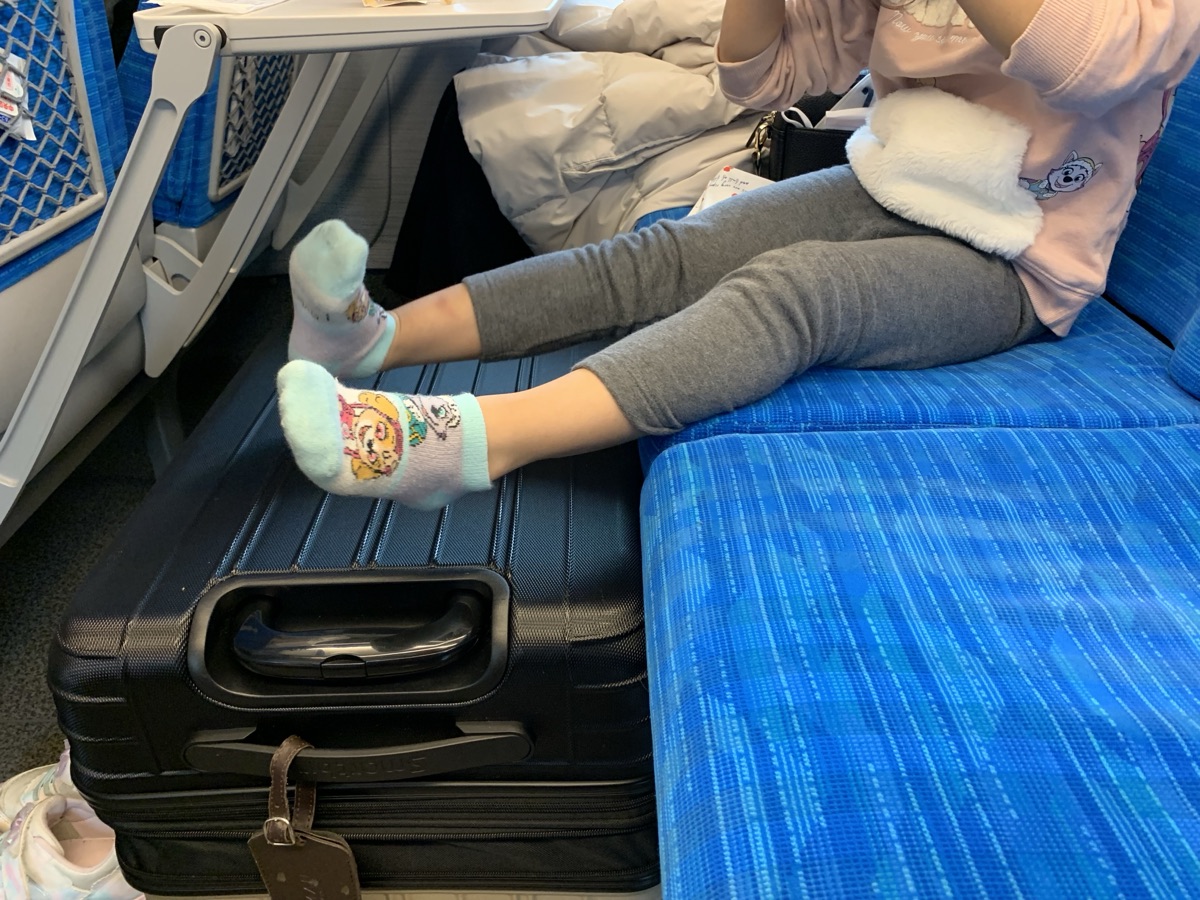 The oversized-luggage row in action — suitcases stay put and out of the aisle.
Getting There / Station Basics
- Both Tokyo Station and Shin-Osaka Station have extensive underground shopping concourses (Character Street, ekiben shops, drugstores) if you need last-minute supplies, diapers, or snacks before boarding.
- Give yourself at least 20–30 minutes of buffer beyond "official" transfer times if you're carrying a stroller and luggage, especially at Tokyo Station.
How much English will you need?
Almost none — the Shinkansen is one of the most English-ready things you'll do in Japan. Onboard announcements and station signage run in English as standard, smartEX is JR Central's official English booking site and app, and ticket machines all have an English menu (your most reliable fallback anywhere). At major stations, JR East's Travel Service Centers staff multilingual counters for tickets and rail passes. The one caveat: don't count on fluent English at every small-station ticket window — stick to the machines or the big-station counters and you'll be fine.
Tokyo Dad's Take
Verdict
For the seat-type distinctions above, see the JR Central Tours guide to reserved and unreserved seats (Japanese). Always check the operator's designated peak dates for your journey.
The Tokaido Shinkansen is genuinely one of the easier ways to travel with a small child in Japan — it's smooth, fast, and has real facilities for families, unlike a lot of long-distance trains elsewhere. It works best for families who reserve seats in advance, specifically request the oversized-luggage row if traveling with a stroller, and pack a simple entertainment backup for the times a nap doesn't happen.
It's a tougher call if you're traveling completely last-minute during Golden Week, Obon, or New Year's without a reservation — in those windows, arrive extra early and expect to plan around sold-out cars. For everyone else, book ahead, sit near the back with the luggage space, and it's a highlight of the trip rather than an ordeal.
Prices, reservation rules, and which specific train cars carry the oversized-luggage area can change — always confirm current details on the official JR Central / smartEX site before booking. Have a question about your specific route? Ask me through the contact page — I answer every message.
Written by Tokyo Dad, a Japanese dad sharing family visits in Japan.