Nasu World Monkey Park with Kids: Elephant Rides, Lemurs on Your Shoulder, and What to Know First (2026)
This post may contain affiliate links. If you book through them, I earn a small commission at no extra cost to you. Learn more.
Nasu World Monkey Park is a small, old-school animal park in the Nasu highlands of Tochigi — about 50 species and 400 animals, according to the park — where the whole point is getting close to the animals. Lemurs climb onto your shoulders in a walk-in feeding room, kids hand carrots to rabbits and guinea pigs, and yes, despite the name, there are two elephants you can feed and ride. A 30-minute animal show is included with admission.
Let me be upfront about that, because it shapes who this park is for: hands-on animal contact — feeding, touching, and riding — is the core of the experience here, not a side attraction. If your family loves that, it's a memorable half day. If animal-interaction attractions aren't your thing, I've included an honest note further down so you can decide before you go.
We visited in March 2025 with our then-5-year-old daughter as part of a Nasu hotel trip, and this guide covers what the park actually is, how the elephant-ride system works, and the two scheduling traps (weekday closures and monkey lunch breaks) that can wreck a visit.
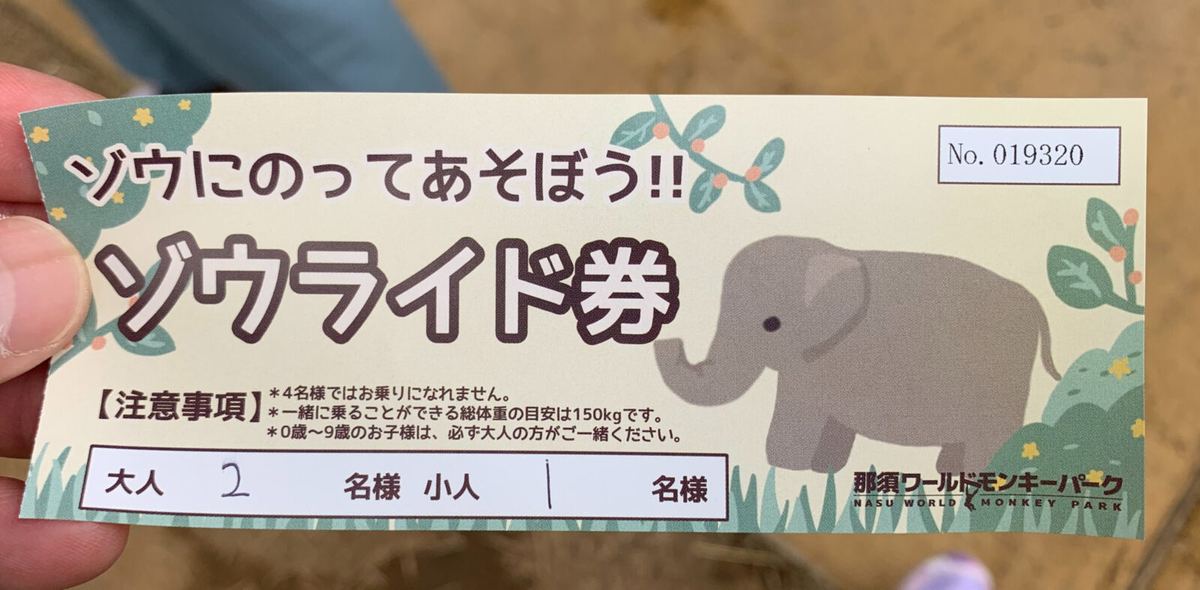 The elephant ride ticket — sold at the little shop to the left of the boarding platform, per group rather than per person.
Quick Facts
| Admission (junior high school and up) | ¥2,300 (about $15) |
| Admission (age 3 to elementary school) | ¥1,200 (about $8) |
| Admission (under 3) | Free |
| Elephant ride (forest course) | ¥3,000 per group of up to 3 riders (max 2 adults) |
| Hours | Weekdays 9:30 AM–4:00 PM (last entry 3:30 PM); weekends/holidays 9:30 AM–4:30 PM (last entry 4:00 PM) — seasonal calendar governs, check before you go |
| Closed | Wednesdays AND Thursdays (open during Golden Week, summer holidays, and New Year weeks) |
| Time needed | Half a day — it's smaller than the name suggests |
| Nearest station | Nasushiobara (Tohoku Shinkansen) or Kuroiso — then a taxi, realistically |
| Parking | Free, roughly 350 spaces |
| Stroller loans | Free |
| English support | Official website and on-site signage are Japanese-only; no English-speaking staff advertised |
Tickets and the elephant-ride system
Regular admission is straightforward: buy at the gate, ¥2,300 for anyone junior-high age and up, ¥1,200 for kids from age 3 through elementary school, free under 3. No advance booking needed for entry — when we went during spring break, there was no meaningful ticket line.
One money tip from our trip: some Nasu hotels sell discounted partner tickets to guests — our hotel's rate was noticeably cheaper than the gate price. If you're staying in Nasu, ask your hotel's front desk before you go. (Prices and partner arrangements change, so treat this as "worth asking," not a promise.)
The elephant ride is the part with an actual system. As of 2026, the park has two Asian elephants, Keo and Kamphuay, who came from Laos. The main "forest course" ride costs ¥3,000 per group — a group is up to three riders, with a maximum of two adults, so a family of two adults and one child fits on a single ticket. You can book up to the day before, or take your chances same-day on a first-come basis; we walked up on a spring-break weekday and rode almost immediately, but I wouldn't count on that during holiday weeks. If it rains, the ride swaps to a short covered mini-course (¥1,000 per group) or you can switch your ticket to an elephant-feeding set instead. One rule worth knowing with a baby: children must be able to sit unassisted, or ride in a carrier on a parent.
Elephant feeding is separate and cheap by comparison — ¥500 for a bucket of carrots, apples, and bananas.
Our visit: lemurs on shoulders, a scared 5-year-old, and a genuinely good show
The elephant ride came first. The setup is a bench seat for up to three riders behind the mahout, with individual seatbelts, plus a harness for small children. The mahout himself simply sits astride the elephant's neck — my daughter was fascinated; I mostly wondered how he never falls off. A fun quirk: if another visitor feeds the elephant while you're on it, your ride effectively extends while it stands there eating. We then bought a feeding bucket, and my wife went first — the elephant curled its trunk around the food and swept it into its mouth in one motion. My daughter tried next, nervously, and was thrilled. The bucket looks generous and is empty within about a minute. There aren't many places in Japan where you can get this close to an elephant; my one lingering question, which the park never answers, is why a monkey park has elephants at all.
Then the hands-on area (Fureai Hiroba) — called a "plaza" but actually indoors. This is the lemur-and-monkey feeding zone, and it's the most intense part of the park for small kids. We bought apple feed and entered the ruffed lemur room first. Staff instruct you, firmly, to hide the food completely in your closed hands before entering — and they mean it. The moment we stepped in, lemurs came straight to us and climbed up my wife, then me. Their paws are surprisingly soft — no sharp claws digging in — and the fur is absurdly fluffy. I could have stayed an hour.
My daughter could not. Being swarmed by climbing animals at eye level is a lot for a 5-year-old, and she went from excited to "monkeys are scary!" in about a minute. The ring-tailed lemur room, next door, was even more intense: the instant we entered, lemurs launched themselves through the air onto us from multiple directions, and our food was gone in seconds. That's where my daughter hit her limit and asked to leave, so our ring-tailed lemur session lasted about ninety seconds. The squirrel monkeys we viewed from outside their room — the park provides a cover-up jacket for anyone entering, because the monkeys are not toilet-trained, and sure enough we watched it happen to another visitor.
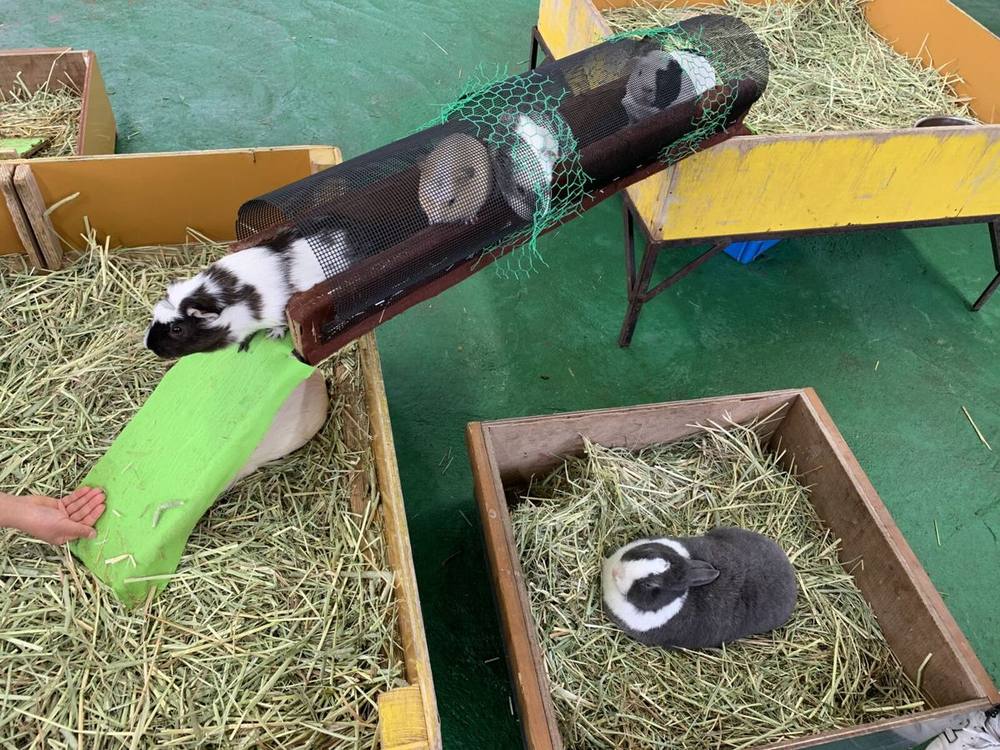 The hands-on area: the animals come to you, fast. Wonderful for animal-mad kids, overwhelming for cautious ones.
Two practical notes: the animals in the hands-on area take a rest break from 12:30 PM for about an hour, so don't plan this for right after lunch. And next to the building is the rabbit-and-guinea-pig corner (roofed but outdoor) — ¥100 carrot feeding, much gentler, and a good confidence-rebuilder for a kid who found the lemurs too much. That's exactly how we used it.
The rest of the park is observation. The monkey exhibit building across from the hands-on area houses capuchins, De Brazza's monkeys, savanna monkeys and others, each with signage about habitat and conservation status — a surprising number are listed as threatened. Honest downsides: the cage mesh is fine enough that spotting the animals can be tricky, and when one monkey starts hollering the whole building erupts periodically. There are also peacocks, parrots, and ducks — a peacock did a full tail display while we were there, our first time seeing one in person, and there's a white peacock too. My daughter spent a happy stretch chasing (well, following) ducks. At the very back is the monkey mountain with a handful of Japanese macaques; we had it entirely to ourselves, which made for relaxed viewing.
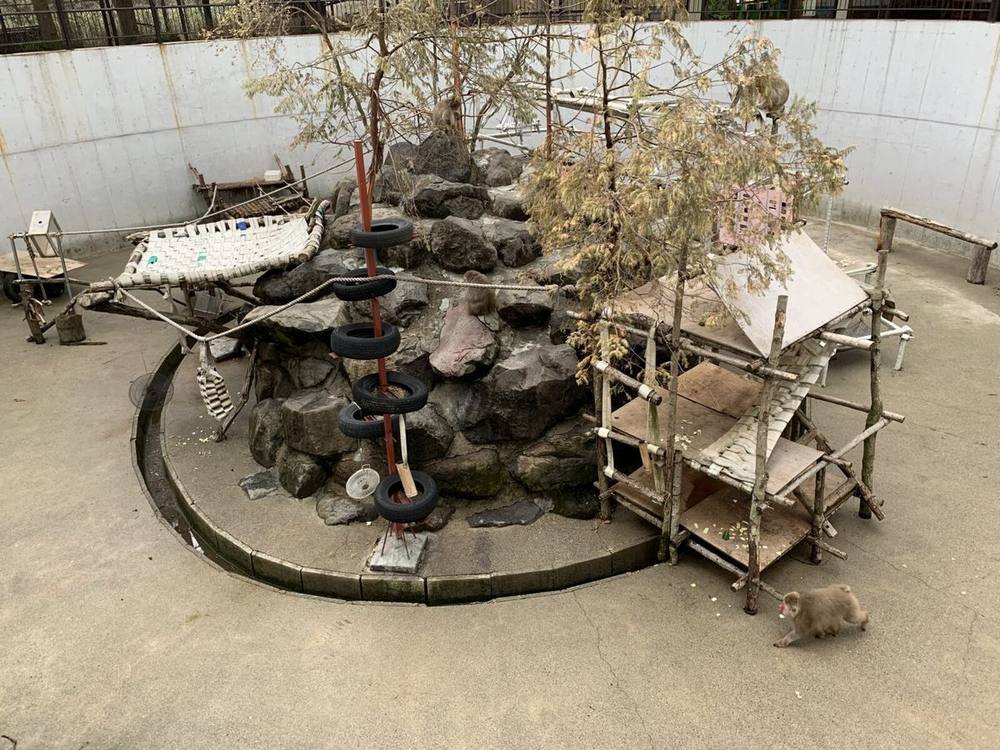 The monkey mountain at the far end of the park — Japanese macaques, and on our visit, zero other people.
The Animal Theater was the highlight — a fan-shaped indoor stage straight ahead from the park entrance, with a roughly 30-minute show included in admission. Our lineup was three acts: a cat named Oscar (a cat, doing actual tricks — I was as skeptical as you are), a capuchin named Mei who nailed some genuinely difficult routines when she felt like listening to her trainer, and the finale, a Japanese macaque named Yuihei doing traditional sarumawashi-style performance: sprinting on stilts, leaping higher than his own height, and taking a bow so deep it read as a formal apology. After the show, ¥100 buys a fortune slip that Yuihei "draws" for you by pressing a button — my daughter's came up sho-kichi, modest luck. It's touristy in the most literal sense and my daughter loved every second.
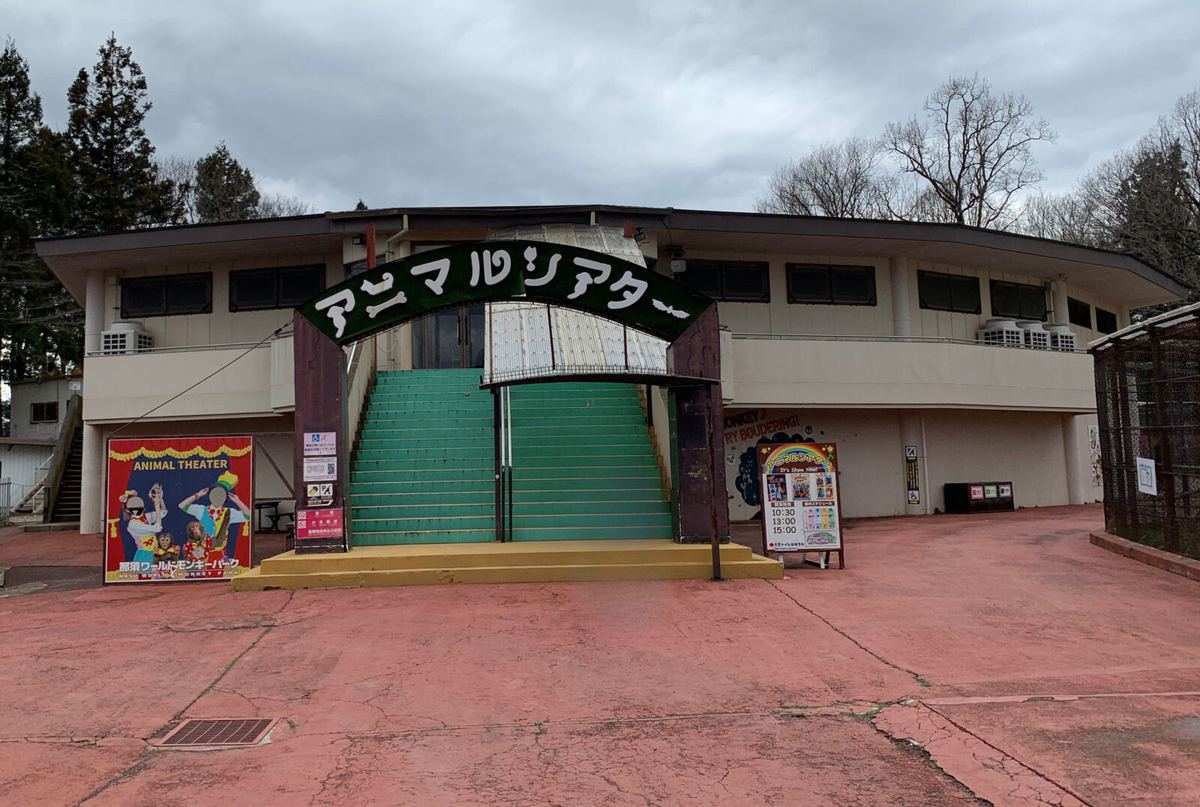
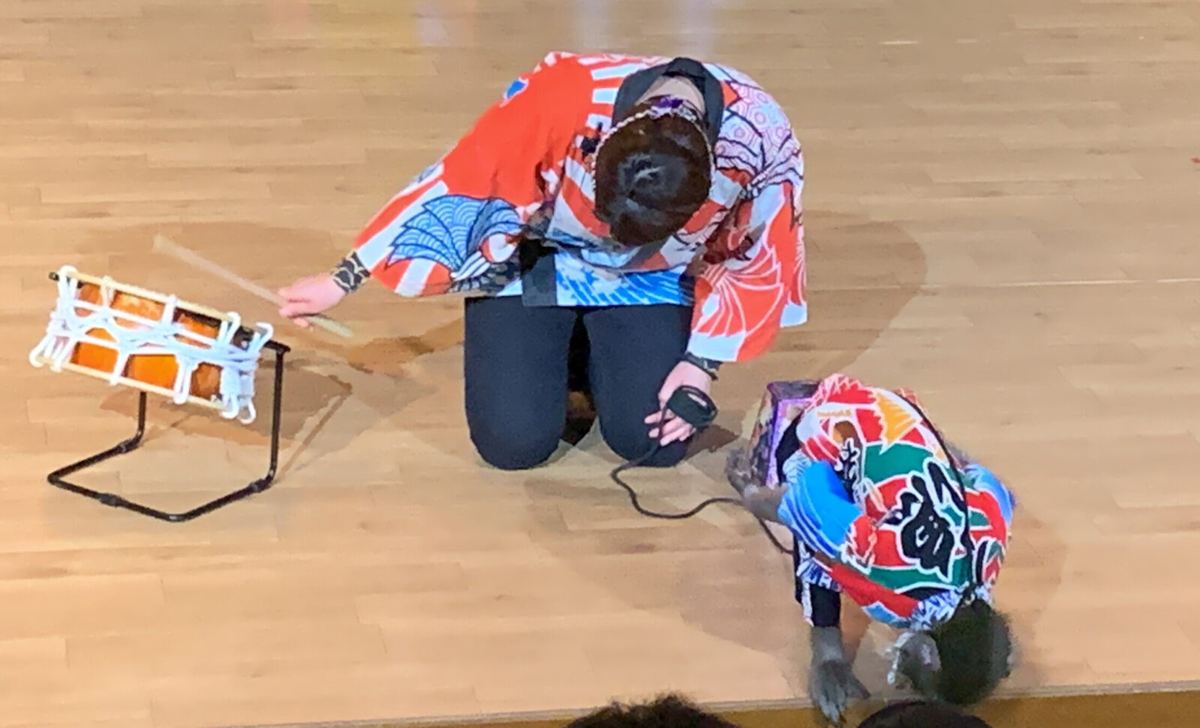 The Animal Theater show — about 30 minutes, included with admission, and easily the best value in the park.
There's also a snake area with scheduled handling sessions (we skipped it — the times didn't line up) and one restaurant, Poi Chai, serving curry, hamburger steak, udon, beef bowls, and ramen. We didn't eat there, so I can't vouch for it.
What Locals Know
- The park closes Wednesdays AND Thursdays. This is the trap that catches trip planners. It stays open on those days only during Golden Week, summer holidays, and the New Year period. Check the park's calendar before locking in your Nasu itinerary.
- Weather can close the whole park. Nasu is genuinely windy highlands. On our arrival day, gusts damaged park structures and it closed on the spot for visitor safety — we swapped that day to nearby Rindoko farm and came back later in the trip. Build one flexible day into a Nasu plan.
- Book the elephant ride the day before if it matters to you. Same-day first-come worked for us on a quiet weekday, but a day-ahead booking removes the gamble. And remember the rain fallback: covered mini-ride or a feeding set.
- Time around the 12:30 animal break. The hands-on area's animals rest for about an hour from 12:30 PM. Go in the morning or mid-afternoon.
- Free strollers, free parking. Stroller loans cost nothing, and the roughly 350-space lot is free — rare enough in Japan to be worth saying.
- It's a half-day park. Locals pair it with a hotel with good kids' facilities or another Nasu attraction the same day. Two hotels are within about a 10-minute drive.
Getting There
Nasu is a Shinkansen-plus-wheels destination. The train part is easy; the last leg is the honest catch.
Be realistic: take a taxi or rent a car. Local buses toward the park exist but involve one or two transfers plus a seasonal sightseeing loop bus that only runs April through November with very few departures a day — on our trip the loop-bus schedule would have allowed at most about three and a half hours at the park, and that's in season. A taxi is roughly 15 minutes from Kuroiso Station or 20–25 minutes from Nasushiobara Station (fares vary; budget accordingly). By car, the park is about 10 minutes from the Nasu Interchange, and if you're staying in the Nasu resort area you may be closer still — it was a 4-minute drive from our hotel.
How much English will you need?
Plan for none being available. The official website is Japanese-only, on-site signage is Japanese, and no English-speaking staff are advertised. In practice the park is visual and simple enough that this matters less than it sounds: pointing and paying works at the gate and the elephant-ride shop, and the feeding rules ("hide the food in your hands") get communicated with unmistakable gestures. Run the official site through your browser's translate function for the calendar and prices before you go — that's the one step I'd call essential, because of the Wednesday/Thursday closures.
A note on the animal interactions
One thing I want to flag honestly, because many families visiting from the US or Australia think about this: elephant riding and hands-on animal contact are attractions that some travelers are no longer comfortable with, and that's a personal call each family will make differently. I can tell you exactly what's offered — rides on two Asian elephants, walk-in feeding rooms, a trained-animal stage show — and that the park does not publish an animal-welfare policy page, so there's no official information to point you to either way. I'm not going to tell you what to conclude. What I can say practically is that the park works fine as an observation-only visit: the monkey exhibits, monkey mountain, birds, and the theater show (included with admission) fill a half day without any hands-on participation, and nobody will push you toward the paid interactions.
Verdict
A good fit if: your kids are animal-obsessed and old enough (or bold enough) to enjoy animals climbing on them; you're already doing a Nasu trip and want a half-day activity to pair with your hotel; or the elephant ride is a bucket-list item for your family — this is one of very few places in Japan offering it.
Less of a fit if: you're uncomfortable with animal rides and hands-on animal attractions — in which case nearby Rindoko farm or Nasu Highland Park are better Nasu picks — or your child is easily startled by animals moving fast at close range, as our daughter discovered mid-lemur-swarm. Observation-only families can still enjoy the exhibits and show, but you'd be paying full admission for the calmer half of the park. And don't build a full day around it: this is a half-day park, and it's closed Wednesdays and Thursdays.
This review reflects our family's actual visit in March 2025, updated with 2026 prices and hours. Details change — always check the official Nasu World Monkey Park website (Japanese only) before you go, and feel free to ask me anything about planning a Nasu trip with kids.
Written by Tokyo Dad, a Japanese dad sharing family visits in Japan.