Funabashi Andersen Park with Kids: Tokyo's Best-Kept Playground Secret (2026)
This post may contain affiliate links. If you book through them, I earn a small commission at no extra cost to you. Learn more.
If you want one full day of real outdoor play — giant obstacle courses, animals to pet, a 13-meter slide, and almost no other tourists — Funabashi Andersen Park in Chiba is it. It's not in any guidebook I've seen, tickets cost about as much as a couple of coffees, and you buy them at the gate, no advance booking needed.
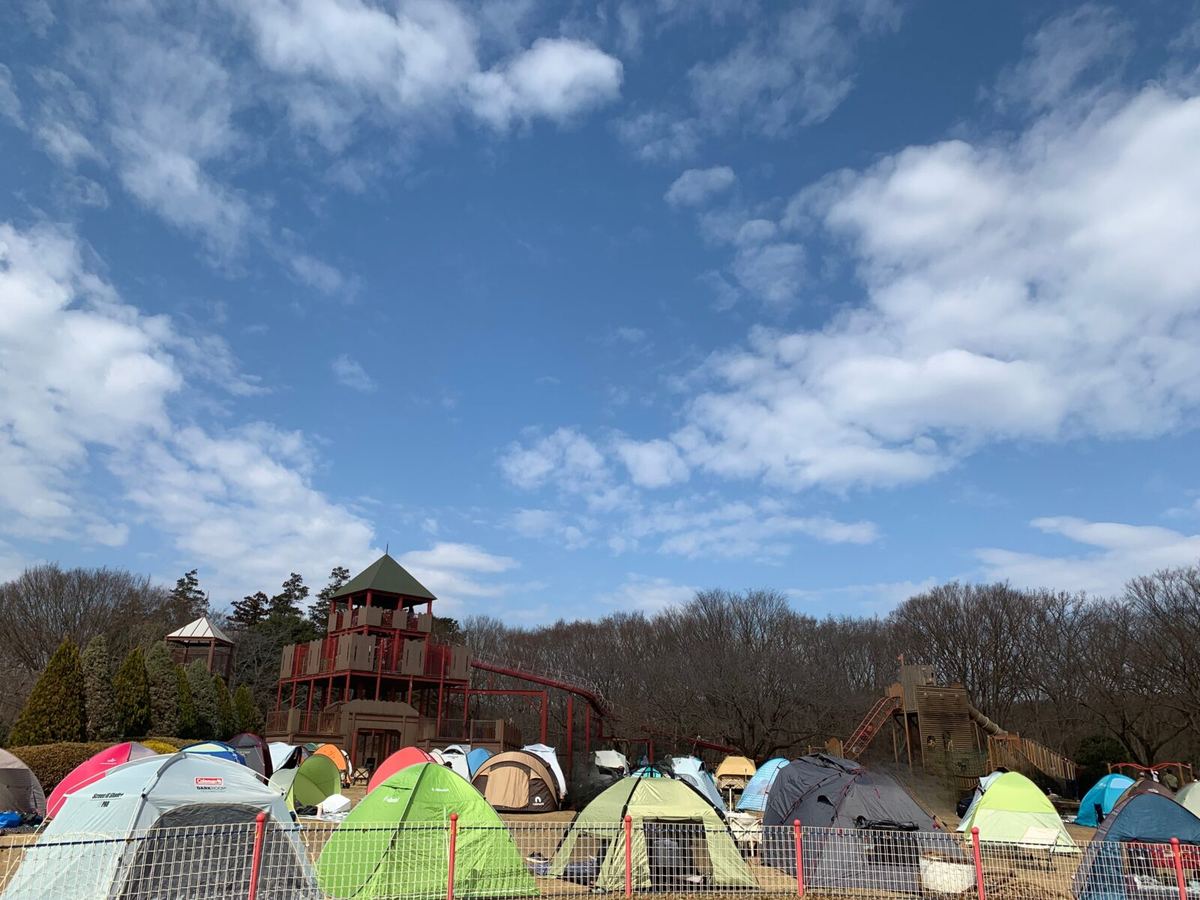 The scale of the place: an athletic tower, open play fields, and rows of family tents — this is what a "playground" looks like here.
As a local dad, I've taken my daughter here more than once, and it's the kind of place that quietly punches way above its weight — it's even landed a surprisingly high spot on TripAdvisor Japan's park rankings, despite almost no foreign visitors knowing it exists. This guide covers what it actually is, how tiring it is (very), and — most importantly — exactly how to get there, because that's the one real catch.
Quick Facts
| Admission (adult) | ¥900 (about $6) |
| Admission (elementary/middle school) | ¥200 (about $1.30) |
| Admission (preschool, age 4+) | ¥100 (about $0.65) |
| Admission (high school, with ID) | ¥600 (about $4) |
| Hours | 9:30 AM–5:00 PM (holidays/school breaks); 9:30 AM–4:00 PM (weekdays) |
| Time needed | Half day to full day |
| Nearest station | JR Funabashi or Tobu Urban Park Line Funabashi (then bus — see below) |
| Stroller rental | Yes, ¥100 (about $0.65) |
| Stroller-friendly | Mostly — paths are wide, but it's a real park with hills and grass |
| English signage/staff | Very limited on-site, but the official site has a downloadable English guide map (PDF) — no English-speaking staff advertised |
| Payment | Cash only — no credit cards accepted anywhere in the park |
Tickets: just buy them at the gate
Unlike most attractions in this guide series, you don't need to book Funabashi Andersen Park in advance. Tickets are sold directly at the entrance gates, and the price is low enough (around $6 for an adult) that there's no real advantage to pre-purchasing through a third-party site. Just bring cash — the park does not accept credit cards anywhere, including at the ticket gate, food stalls, or paid activities like the pony rides and mini train.
If you're combining this with other Tokyo-area attractions on the same trip, it's worth carrying extra ¥1,000 and ¥500 coins for the small paid activities inside (more on those below).
What is Funabashi Andersen Park?
Despite the name, this is a large public park modeled after Odense, Denmark, the birthplace of Hans Christian Andersen. Its big windmill, fountains, brick entrance buildings, flower gardens, and craft workshops carry the Danish theme throughout; the experience is closer to a storybook garden than a character-and-ride theme park.
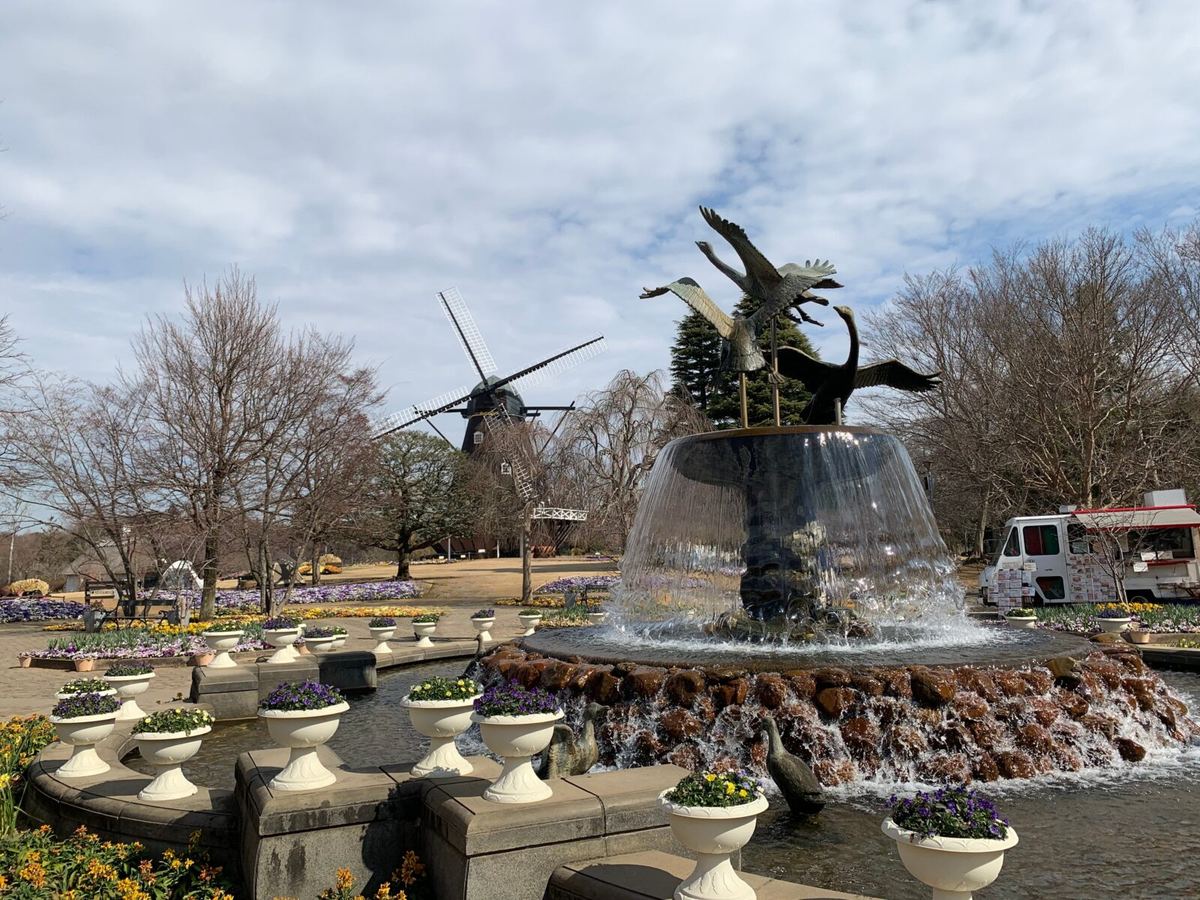 The Danish theming near the entrance — fountains, flowers, and the park's landmark windmill.
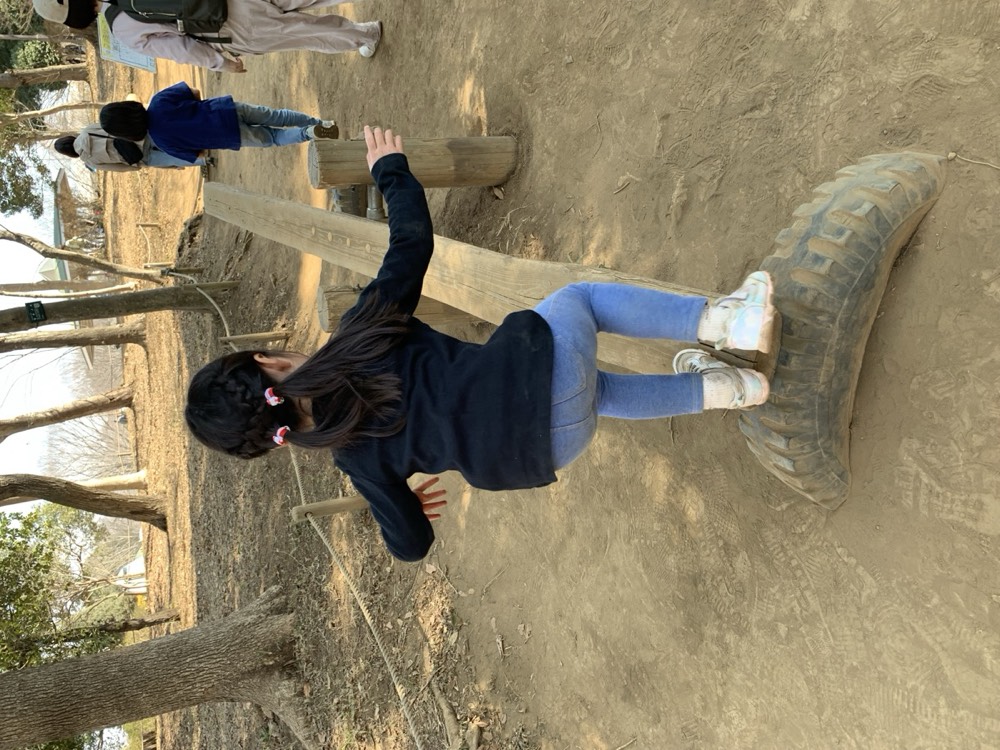
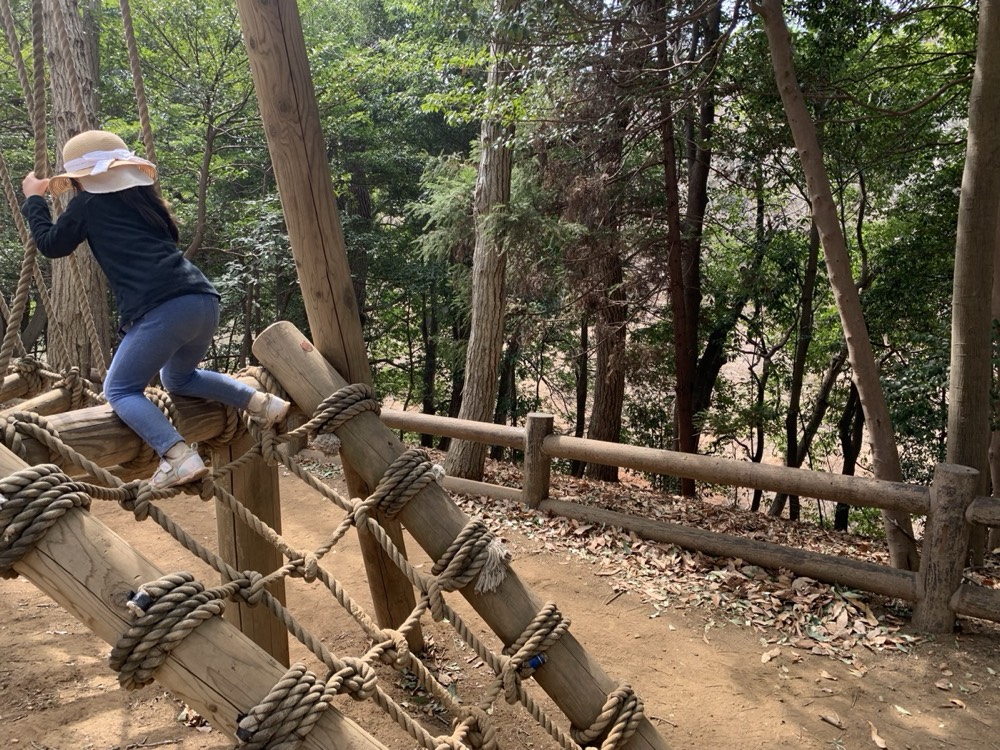
But the real draw for kids is the sheer scale of the physical play areas. There are roughly 40 obstacle-course elements spread across four courses of increasing difficulty — rope bridges, log balance beams, tunnels, and net climbs — plus a giant ball pit area, a 13-meter slide built into a castle structure, and a separate zone where kids can pet guinea pigs, rabbits, sheep, and goats.
What Locals Know
This is the section that matters most if you're coming from outside Japan, because Funabashi Andersen Park almost never appears in English-language travel guides — which is exactly why it's worth knowing about.
- Avoid free-admission days. The park waives admission for kids several times a year and for everyone once a year. Those days sound great on paper, but the crowding gets bad enough that it actually hurts the experience — long waits for the slide, the pony rides, and the animal petting. A normal paid day is a much better visit.
- Cash only, everywhere. Not just the gate — the food stalls, coin lockers, stroller rental, and every paid activity (pony rides, mini train, boat rental, tandem bikes) are cash only. Bring more coins than you think you'll need.
- Bring clothes you don't mind getting dirty. Between the ball pit area and the sandy play zones, kids come out noticeably dusty. It's part of the fun, but pack a spare outfit.
- The big slide has a wait, and a trick for comfort. Expect roughly a 30-minute queue for the castle slide during busier hours. It's a roller-type slide, and about half the kids using it bring a seat cushion to avoid a bumpy ride — you can buy one at a nearby 100-yen shop before you go, or sometimes find similar items for sale in the park.
- The animal area runs on a schedule with a lunch break. Petting hours are roughly 10:30 AM–12:00 PM and 1:30 PM–3:30 PM, so time your visit around those windows if the animals are a priority for your kids.
- Go early. Arriving close to opening gets you shorter lines and cooler weather before the park fills up.
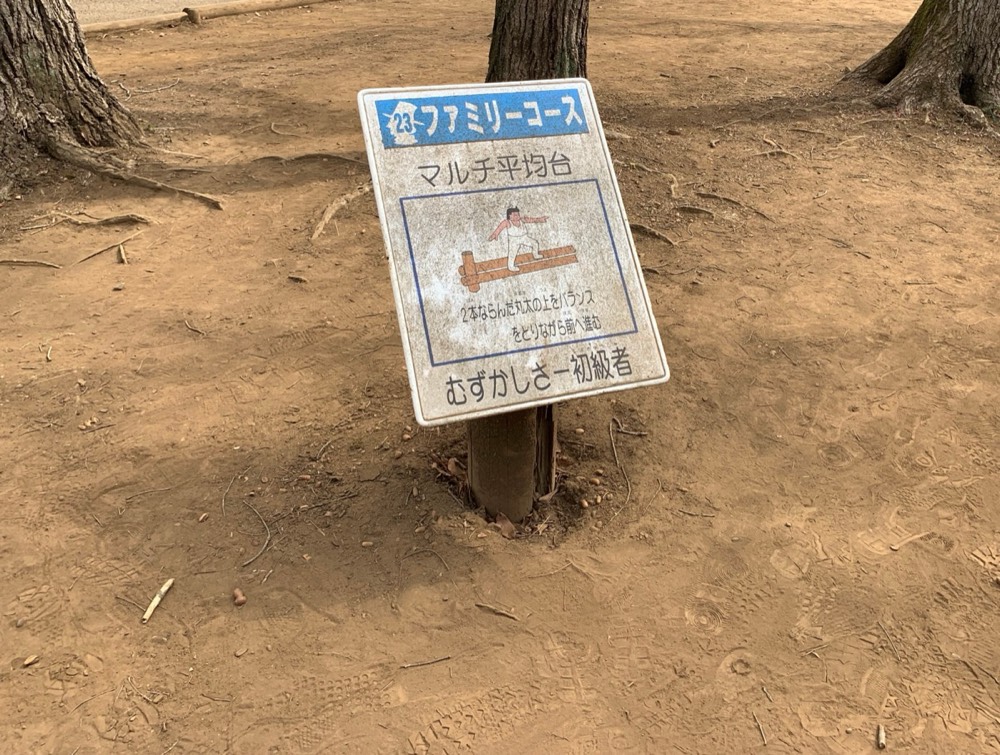 Each obstacle is numbered and labeled by difficulty — the "Family Course" is the easiest of the four.
Our Visit: A Full, Exhausting, Great Day
We went on a warm day in March with our then-4-year-old daughter. We started at the ball pit area — a large zone covered in soft plastic balls, with separate sections for younger and older kids. The toddler section was noticeably quiet, just a handful of other children, which made it easy to let her explore at her own pace. Shoes come off before going in, and despite being outdoors, it stayed cleaner underfoot than we expected.
From there we moved to the Family Course, the easiest of the four obstacle courses, and got through about half of it in roughly an hour — rope bridges, balance logs, and small climbing challenges scaled for younger kids. We supervised closely; some of the equipment has a real fall risk for little ones, so this isn't a course to let a 4-year-old attempt solo.
Next was the big castle slide — worth the roughly 30-minute wait, though we hadn't thought to bring a seat cushion and felt it on the way down.
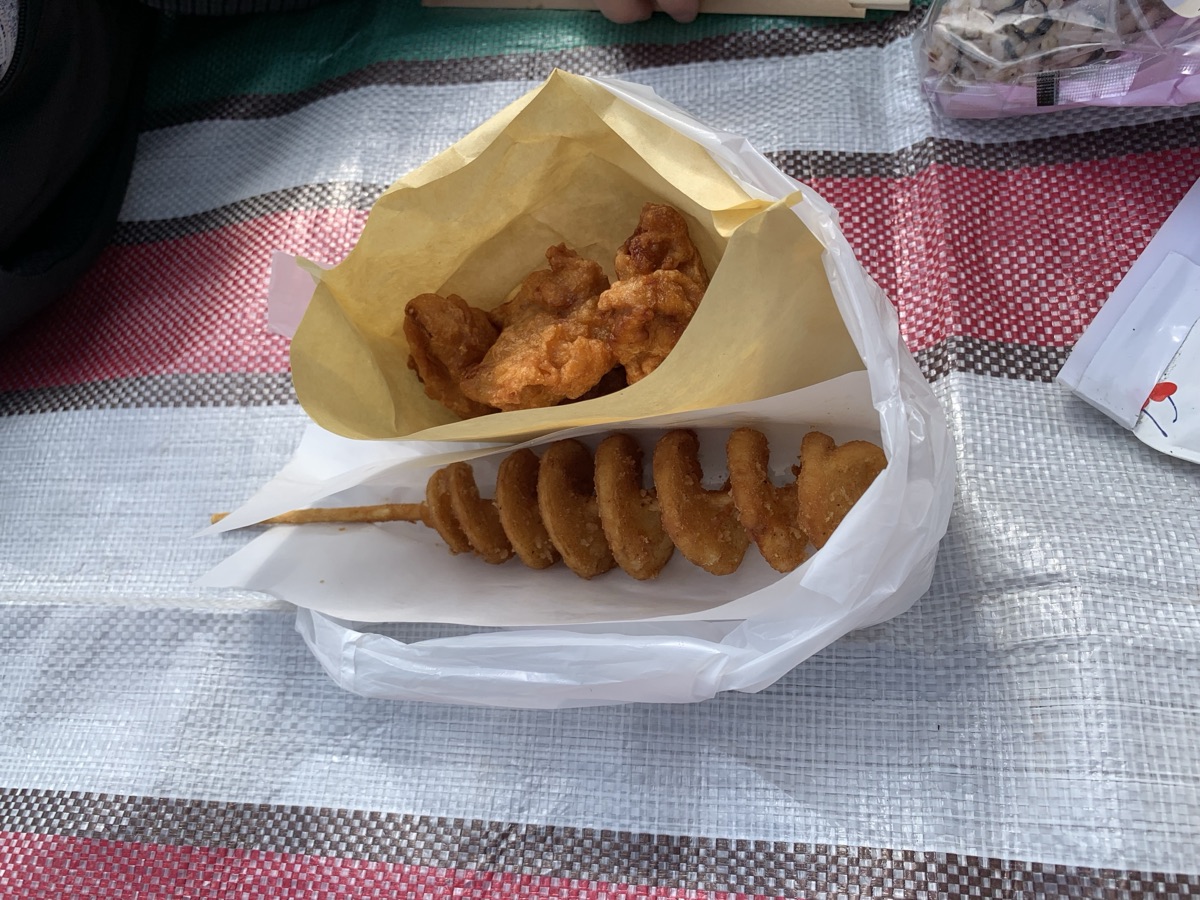
For lunch, we'd packed rice balls from home and supplemented with fries and fried chicken from one of the park's eight food stalls, spread out on a picnic blanket. It's a good system: pack a little, buy a little, and treat it like a picnic rather than a restaurant meal. Lunchtime around noon gets busy, with roughly a 10-minute wait at the food stalls.
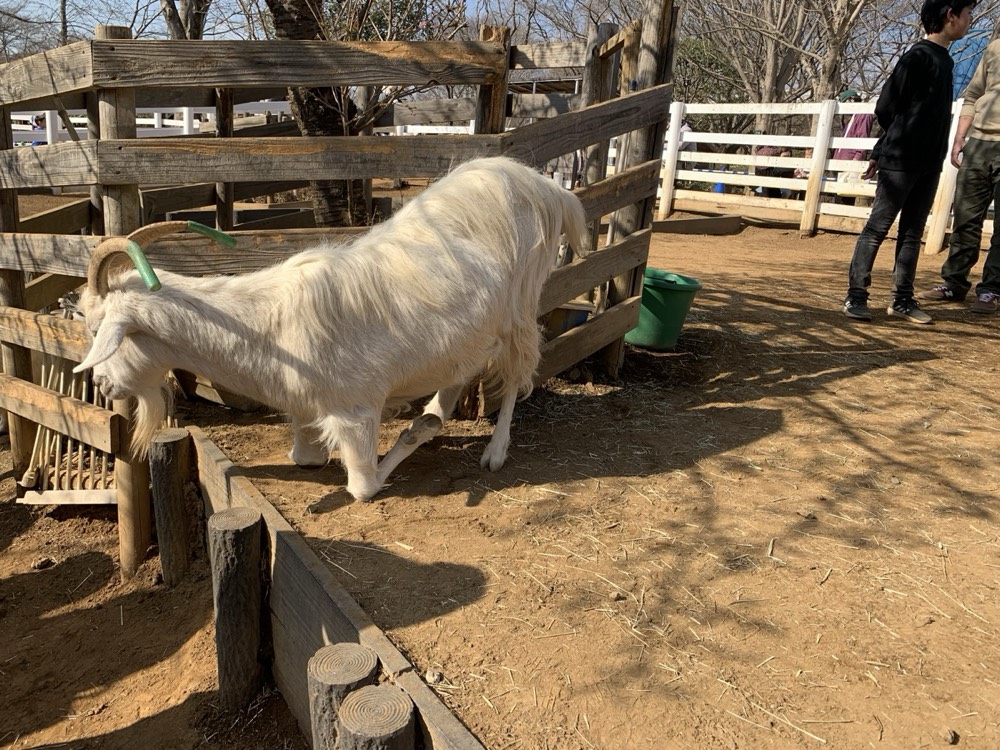
After lunch: the animal area, where our daughter waited about 10 minutes to hold a guinea pig (worth it, she says), then fed hay to a goat in the shared sheep-and-goat pen. Hand-washing stations with soap and sanitizer are right at the exit, which we appreciated. We also took a spin on one of the four-person tandem "unique bicycles" as a family — steering is shared between riders, there are some uphill stretches, and it's more physical effort than it looks, but it's a fun five-to-ten-minute novelty.
By the time we finished with soft-serve ice cream (made from farm-fresh milk — there are two stands in the park), our daughter fell asleep on the bus ride home. I was tired too. This is a full-body, full-day kind of park, not a stroll-through.
Food, Diapering, and Nursing
The park has eight food facilities spread across the grounds, serving curry, ramen, fries, fried chicken, and ice cream. Bringing homemade food (onigiri rice balls and sandwiches travel well) and supplementing with park food is what most local families do — a picnic blanket is standard equipment here, not an eccentric choice.
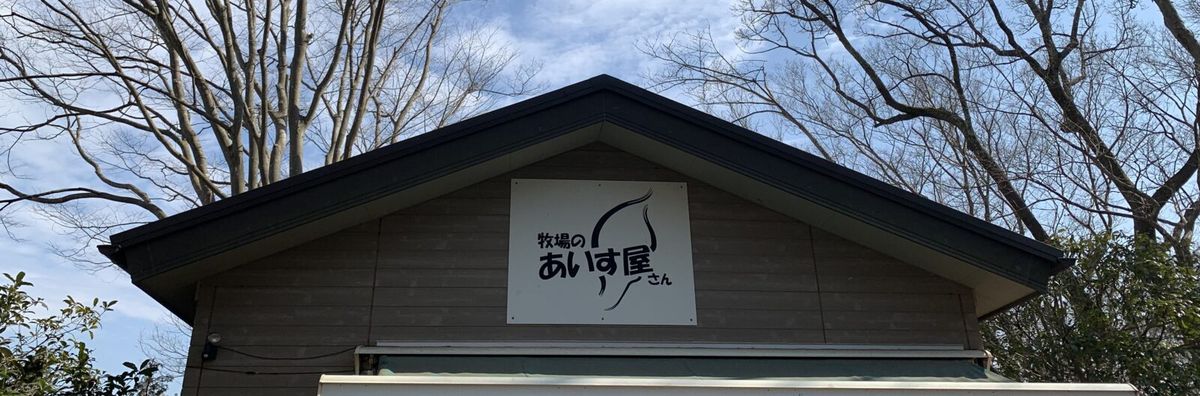 One of the park's eight food stands — the ice cream shop is a reliable bribe for tired legs.
Facility-wise, this is a Japanese public park rather than a commercial attraction, so don't expect the polished nursing rooms you'd find at an indoor mall like the ones in Odaiba. Bring your own changing supplies as backup and plan around it as an outdoor-day destination.
Getting There (the one real catch)
This is the honest downside of Funabashi Andersen Park: it's genuinely worth the trip, but it takes some effort to reach if you don't have a car.
By car: This is the easiest option by far, and how most local families do it. Parking is ¥500 (about $3.25) for a standard car, dropping to ¥300 in winter (December 1–March 15).
By public transit: There's no way around a bus leg, so budget extra time. The simplest route from Tokyo Station is one train and one direct bus:
Total transit cost is roughly ¥900 (about $6) per adult each way, and about 1 hour 15 minutes door to door. Check the bus timetable in advance — the direct bus doesn't run frequently. An alternate route: JR Sobu Line to Tsudanuma, transfer to the Keisei Matsudo Line (formerly the Shin-Keisei Railway) to Misaki Station, then the Se02 bus to the park (roughly ¥600–700 total) — more transfers, but more frequent departures.
By taxi: From Funabashi Station, expect about ¥6,000 (about $40) and 20–30 minutes — a reasonable option if you're traveling with a stroller and gear and want to skip the transfers.
With a stroller, the bus transfer is manageable but not effortless — you're folding and unfolding it across two or three changes of vehicle. If your child is old enough to walk most of the day, or if you're comfortable with a baby carrier instead of a stroller for the transit portion, it's a much smoother trip.
How much English will you need?
Honestly, not much — but bring a plan. The official Funabashi Andersen Park website has a downloadable English guide map (PDF) with a machine-translation toggle, so print or save it before you go rather than counting on signage once you're there. If you want to buy tickets ahead of time, that process runs through Japanese-only channels like convenience-store kiosks — but nobody really needs to bother, since same-day purchase at the gate works fine without any Japanese (cash only, as covered above). There's no English-speaking staff advertised, but this is a visual, self-explanatory local park, not a museum you need to be talked through.
Verdict
Funabashi Andersen Park is worth the trip for families who want one real, physical, outdoor day away from Tokyo's crowds and screens — kids roughly preschool through elementary age who like climbing, animals, and getting a little dirty will have a genuinely great time, and the price (a few dollars per person) makes it one of the cheapest full-day outings in the Tokyo area.
It's not the right pick if you don't have a full day to give it, if your kids are too young for the obstacle courses and too old for the ball pit, or if the transit logistics feel like too much for your trip — in that case, a closer indoor option like the attractions in Odaiba will serve you better. But if you're willing to make the trip, this is exactly the kind of place a guidebook won't tell you about, and your kids will remember it.
This review reflects our family's actual visit. Prices, hours, and bus schedules can change — always check the official Funabashi Andersen Park website before you go.
Written by Tokyo Dad, a Japanese dad sharing family visits in Japan.