ASOBono! Tokyo with Kids: An Honest Local Dad Guide (2026)
This post may contain affiliate links. If you book through them, I earn a small commission at no extra cost to you. Learn more.
ASOBono! is one of the best backup plans in Tokyo when rain, summer heat, or a tired child makes another outdoor sight-seeing stop feel impossible. It is a big indoor play space at Tokyo Dome City, with pretend shops, trains, a huge ball-pit area, and a separate baby zone. For visiting families with kids roughly one to six, it can be an easy, happy reset day that makes the rest of a Japan trip go better.
As a local dad, I have brought my daughter here regularly since she was about one. We still return once or twice a year now that she is five. This is the practical guide I wish overseas families had before arriving: what it costs, when to go, what happens with shoes and strollers, and why I would choose it over simply spending another hour in a hotel room on a wet day.
Table of Contents
- At a Glance
- Tickets and current prices
- What ASOBono! is actually like
- What Locals Know
- Food, diapers, and nursing
- Getting there with a stroller
- Verdict
At a Glance
| Location | Tokyo Dome City, Bunkyo, central Tokyo |
| Best age | Most fun for about 1-6; official child admission covers ages 6 months through elementary school |
| Allow | About 2-3 hours; longer on a rainy day |
| Hours | Weekdays 10:00-18:00; weekends and Japanese public holidays 9:30-19:00. Last admission is 70 minutes before closing. |
| Price | Child's first 60 minutes: ¥950-1,300 (about US$6-9), plus the same tiered admission for each adult. Prices depend on the date. |
| Extra time | Child: ¥450-650 per extra 30 minutes (date tier dependent) |
| Stroller | Bring it to the building, then park it before the shoe-off play area |
| English | Official information is available in English; inside, expect mostly Japanese signs and staff interaction |
| Nearest stations | Korakuen, Kasuga, or Suidobashi |
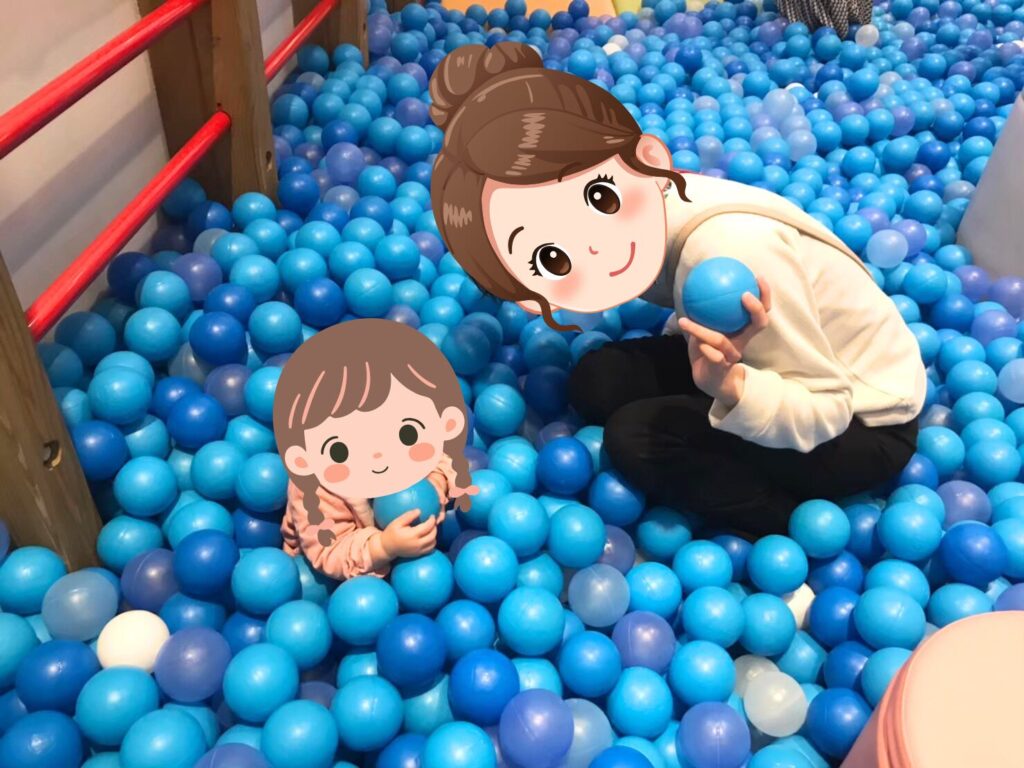 The blue ball-pit area is where our visits often slow down in the best way: one child, one parent, and plenty of room to play.
Tickets and current prices
ASOBono! uses a date-based A-D price calendar. On the least expensive A days, a child's first 60 minutes costs ¥950 and one accompanying adult costs ¥950. On D days, the highest tier, each is ¥1,300. A child's additional 30 minutes costs ¥450-650 depending on that day's tier. Babies five months and under are free.
There is also a child's all-day pass on selected A-calendar days, currently ¥2,100 (about US$14). That can be good value if you are staying close by and want to come and go, but it is not available every day. Adults and children have separate admission charges, so check the total for your family rather than looking only at the children's price.
For current hours, the price calendar, and online ticket options, start with ASOBono!'s official English information page. The purchase pages are mainly in Japanese. You can use your browser's translation function, or buy at the counter when you arrive. There is no general reservation requirement, but popular dates and bad-weather days can involve a wait or temporary entry limits.
I did not add an affiliate ticket link here because I could not find a reliable Klook listing for ASOBono! itself. An official link is more useful than sending you to a mismatched ticket page.
What ASOBono! is actually like
Think of ASOBono! as several play spaces joined together, rather than one giant soft-play room. You enter the reception area, leave your shoes, and move between different kinds of play. That variety is why it has worked for my daughter at very different ages.
Colorful Town is the pretend-play area. Kids can run a little shop, prepare toy food, work a register, or set up a bakery. This is the part that tends to hold the attention of preschoolers who like copying what adults do at home.
Pleasure Station is for vehicles, building toys, and rail play. It has been a useful change of pace for us after the more physical areas. It is also the kind of area where a child who does not speak Japanese can simply start playing without needing instructions.
Adventure Ocean is the active part: a big ball pit, climbing and moving play, and space to use up energy. It is usually the loudest area. If your child is sensitive to noise or gets overwhelmed by busy indoor spaces, begin with the quieter pretend-play or toy areas and save this for later.
 The ball pit is the most active part of the indoor play space.
For babies and young toddlers, there is HAI HAI Garden, a dedicated baby area with softer, age-appropriate play. This is a meaningful difference from a general indoor playground: parents with a crawling baby are not expected to share the busiest space with running older kids.
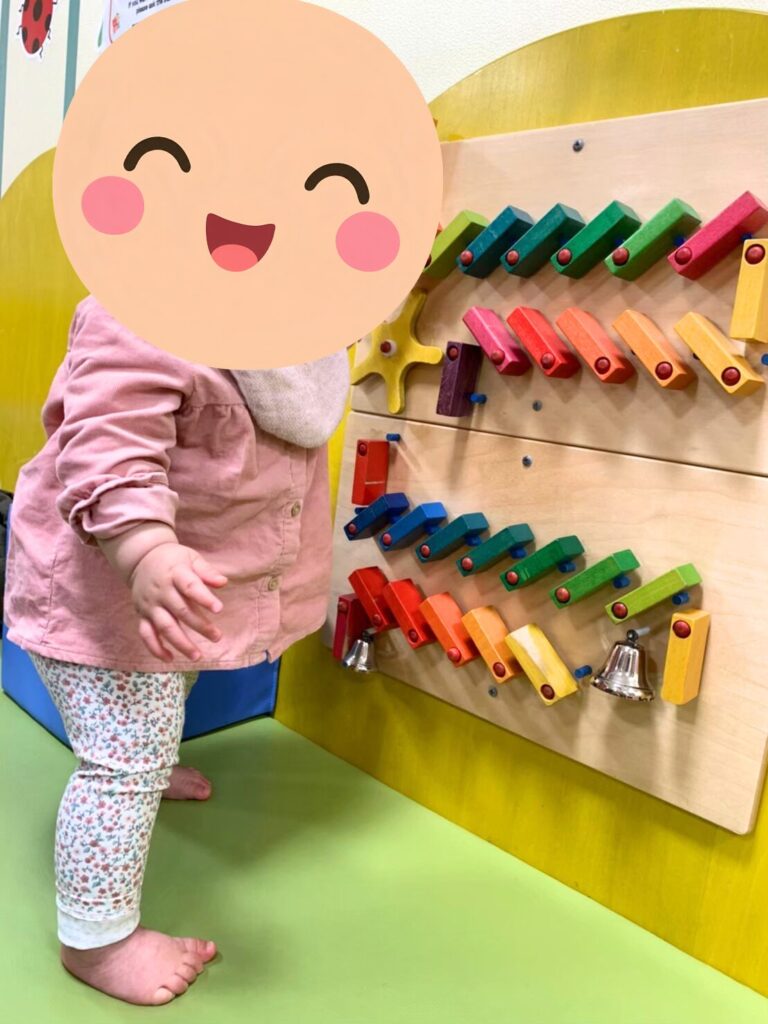 The baby-focused area gives very young children their own pace and space.
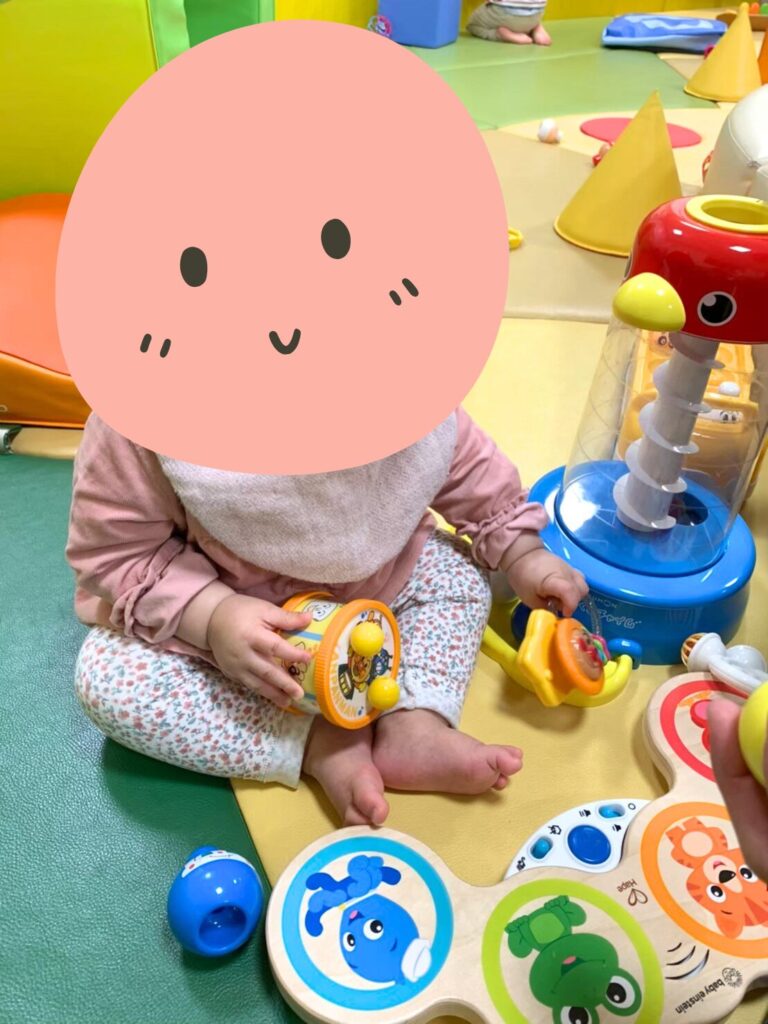 There are simple toys as well as equipment for moving and climbing.
Tokyo Dad's Take
What has changed over the years is my daughter's pace. At one, the baby zone was the main event. At five, she is more interested in shops and role-play, then wants to race to the ball pit. That is why I would put ASOBono! high on the list for families travelling with more than one young child: siblings can often find different things to do without the entire group having to leave after 20 minutes.
The trade-off is that this is a Japanese local play facility. It is clean, imaginative, and very practical, but it does not provide a guided English experience or a "Tokyo only" story to take home. If your child is already coping well with a busy trip, you may prefer to use the time for LEGOLAND Discovery Center Tokyo or KidZania Tokyo. If everyone is tired, ASOBono! is the better call.
What Locals Know
- Weekday opening time is the sweet spot. On our usual weekday visits, arriving at opening has meant walking in without much fuss. The space gets busier toward late morning and lunchtime, especially when the weather is poor.
- Rain changes the equation. Tokyo families use indoor places like this as a rain plan too. A weekend, school holiday, or rainy day can mean a queue even if the weather outside looks like the only problem.
- Everyone removes shoes. This is normal in many Japanese indoor play spaces. We have entered after taking off shoes, and children have been asked to play barefoot on our visits. Check the staff instructions and posted rules on the day.
- Do not count on re-entry. Re-entry is generally not included with timed admission. The current exception is for a child using an eligible one-day pass and the people accompanying that child. Decide whether you want lunch before entering or after leaving.
- Bring a small bag, not a full day's luggage. You will be moving between play zones and supervising a child. Large bags are awkward; use a station locker or your hotel where possible.
Food, diapers, and nursing
Plan a proper meal outside the play area. Tokyo Dome City has restaurants and a food court close by, including GO-FUN next door to ASOBono!. On our visits, that has been the easy lunch plan. Food and snacks are not generally for eating in the play space; baby food is the practical exception. Ask staff which rest areas allow covered drinks when you enter.
For babies, the dedicated HAI HAI Garden and the nearby nursing-room facilities make this much more workable than trying to manage a nap and a diaper change in a regular attraction. As with any large complex, ask staff for the current nursing and diaper-changing location rather than relying on an old map.
One Japan-specific tip: a convenience store is a useful pre-visit stop for water, wipes, and a quick snack for after you leave. They are everywhere around major stations, but indoor facilities often have their own rules about eating once you are inside.
Getting there with a stroller
ASOBono! is inside Tokyo Dome City in Bunkyo. The closest useful stations are Korakuen Station (Tokyo Metro Marunouchi and Namboku lines), Kasuga Station (Toei Mita and Oedo lines), and Suidobashi Station (JR Chuo-Sobu local line and Toei Mita line).
For many families, Korakuen is the simplest target because the Tokyo Dome City complex is right outside. From central Tokyo, choose the station that gives you the fewest transfers rather than following one fixed route: with a stroller, avoiding an unnecessary transfer is usually worth more than saving two minutes. Google Maps' wheelchair-accessible directions are helpful on the day because they show elevator routes.
The complex itself is stroller-friendly enough to reach the entrance, but the play areas are a shoes-off space. There is stroller parking near the entrance; take your essentials inside and leave the stroller there. Build in an extra 10 minutes for finding the correct building in the Tokyo Dome City complex, especially on your first visit.
When ASOBono! fits best in a Tokyo itinerary
This is an excellent rainy-day swap, not a place I would schedule months in advance unless your child is especially young or you know the weather will be difficult. It also works well after a slow morning near Tokyo Station, Ueno, or Shinjuku when the adults want an easy afternoon and the kids need free play.
If your family prefers a character attraction, compare it with Sanrio Puroland with kids. If you are travelling with a child who needs familiar characters and gentler play, the Anpanman Children's Museum in Yokohama may be a better match. ASOBono!'s advantage is simple: central Tokyo, no language-dependent programme, and enough room to let kids be kids.
Verdict: Is ASOBono! worth it for visiting families?
A good fit for: families with kids roughly one to six, babies and toddlers who need a safe indoor reset, parents facing rain or summer heat, and anyone staying in central Tokyo who wants a low-stress afternoon.
Less of a fit for: families with only a short Tokyo stay, children who are already closer to the upper end of elementary-school age, or travellers looking specifically for an English tour, a uniquely Japanese cultural experience, or thrill rides.
My honest verdict: ASOBono! is not the attraction you build an entire Japan trip around. It is the place that can rescue a difficult weather day or a wobbly afternoon. For us, the combination of pretend play, active play, and a proper baby area has made it worth returning to as my daughter has grown. That quiet reliability is a very good thing to have in your Tokyo plan.
For another hands-on indoor outing for younger children, see our Yokohama Anpanman Children's Museum guide. Both are easiest to enjoy when you plan around your child's age and energy.
This guide reflects our family's repeat visits to ASOBono! and was checked against the official English information page in July 2026. Prices, hours, entry conditions, and online ticket options can change, so please check the official page before you go. Photos in this post have had identifying details removed.
Written by Tokyo Dad, a Japanese dad sharing family visits in Japan.